
A thousand years of silence pressed into stone. That is what you feel the moment you step through the Cheonwangmun Gate at Bulguksa (불국사) and realize the ground beneath your feet has not fundamentally changed since the 8th century.
Most visitors arrive with a camera and leave with photographs. The rare few arrive with nothing and leave changed. The difference is not the place. It is the attention.
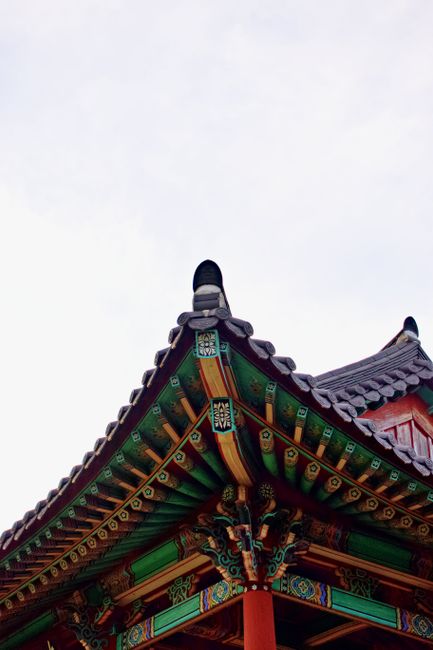
The Mountain That Refused to Let Go of Its Secrets
Bulguksa sits on the western slopes of Mount Tohamsan (토함산) in Gyeongju (경주), roughly 16 kilometers from the city center. The temple was originally constructed in 528 CE during the Silla Kingdom, then dramatically expanded in 751 CE under the direction of Kim Daeseong — a government minister who, according to historical records, commissioned both Bulguksa and Seokguram (석굴암) simultaneously: one for his parents in this life, one for his parents in a previous life. That is not mythology. That is the documented motivation behind two UNESCO World Heritage Sites.
The scale of devotion is architectural. The Cheongungyo and Baegungyo stone stairways — 33 steps in total, representing the 33 heavens of Buddhist cosmology — have survived intact since 751 CE. They are not replicas. They are the original stones, worn smooth by twelve centuries of feet and rain. You cannot walk on them. The path beside them is newer by about 1,200 years.
“The bridge is not decoration. It is the border between the profane world and the Pure Land. Every stone placed there was a theological argument made in granite.”
Two stone pagodas stand in the main courtyard: Dabotap (다보탑) and Seokgatap (석가탑). Built at the same time, by the same hands — and they look nothing alike. Dabotap is elaborate: tiered, ornate, structurally complex. Seokgatap is spare, almost severe. The contrast was intentional. One represents the abundance of the cosmos; the other represents the silence at its center. Dabotap’s image appears on the South Korean 10-won coin, a detail most Koreans know and most foreign visitors do not.
📍 Bulguksa (불국사)
- Address: 385 Bulguk-ro, Gyeongju-si, Gyeongsangbuk-do
- Hours: March–November 07:00–18:00 / December–February 07:00–17:00
- Admission: Adults ₩6,000 / Youth ₩4,000 / Children ₩3,000
- Getting there: From Gyeongju Bus Terminal, take Bus No. 10 or 11 — approximately 40 minutes. Taxis from central Gyeongju run approximately ₩15,000–₩18,000.
- Official site: http://www.bulguksa.or.kr
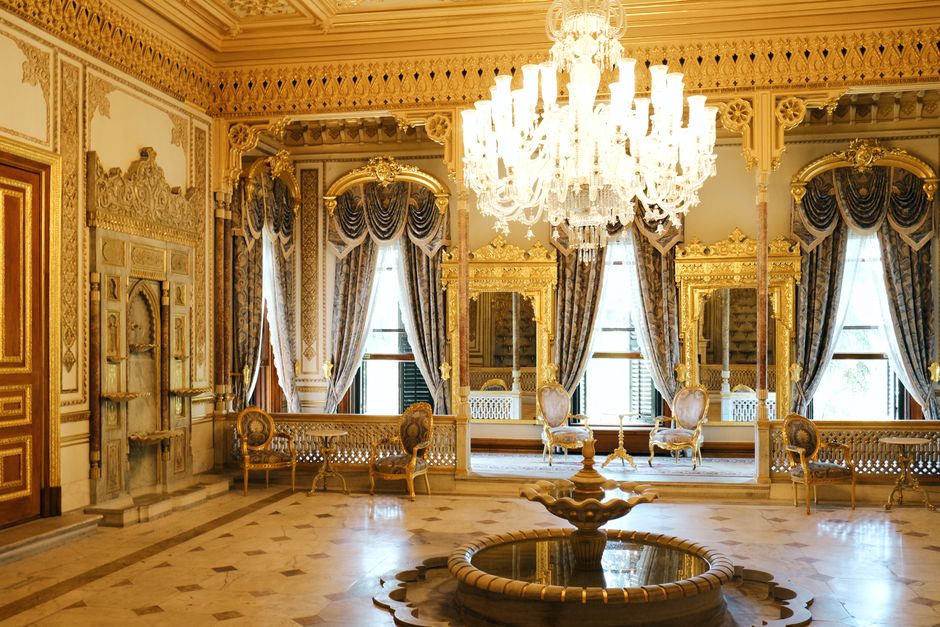
The Grotto Nobody Was Supposed to Find
Seokguram sits 4 kilometers above Bulguksa, near the summit of Mount Tohamsan at roughly 750 meters elevation. It was not built to be convenient. It was built to face east — precisely east — so that on the spring equinox, the first light of sunrise strikes the forehead of the central Buddha statue at the exact angle the 8th-century architects intended. That alignment has held for over 1,270 years.
The grotto is not a natural cave. It is an entirely artificial stone chamber, constructed from granite blocks without mortar, using a corbelling technique that distributes weight so precisely that the dome has never collapsed. When Japanese colonial-era engineers attempted to restore it in 1913, they dismantled portions of the structure and reassembled it using concrete. The dome began leaking immediately. It took decades of subsequent restoration work to partially correct the damage. The original builders understood something about stone and pressure that took modern engineers a century to begin to appreciate.
The central Buddha figure — 3.26 meters tall, carved from a single granite block — sits in a posture called the Bhumisparsha mudra: right hand extended downward, fingers touching the earth, calling the ground itself as witness to enlightenment. Art historians describe the expression as serene. That word is inadequate. There is a quality of absolute stillness in the carved features that feels less like emotion and more like the absence of urgency. As if the stone itself decided to stop being afraid.
Around the circular wall, 38 relief figures — bodhisattvas, guardians, disciples — are carved in a sequence that functions as a visual scripture. Each figure is distinct. Each posture carries specific iconographic meaning. Foreign visitors without a guide will see beautiful carvings. Visitors who spend twenty minutes with a reference text beforehand will see an argument about the nature of consciousness rendered in stone. The difference in experience is not small.
You cannot enter the inner chamber. A glass barrier was installed in the 1960s to protect the humidity-sensitive carvings from breath and body heat. A genuine loss and a genuine necessity, simultaneously. Stand at the glass long enough and the distance stops mattering.
📍 Seokguram Grotto (석굴암)
- Address: 873-243 Tohamsan-ro, Gyeongju-si, Gyeongsangbuk-do
- Hours: March–November 07:00–18:00 / December–February 07:00–17:00
- Admission: Adults ₩6,000 / Youth ₩4,000 / Children ₩3,000 (combined ticket with Bulguksa available)
- Getting there: From Bulguksa, take Bus No. 12 (approximately 15 minutes) or walk the forest trail (approximately 1 hour, well-marked). Taxis available at Bulguksa entrance.
- Official site: http://www.seokguram.org
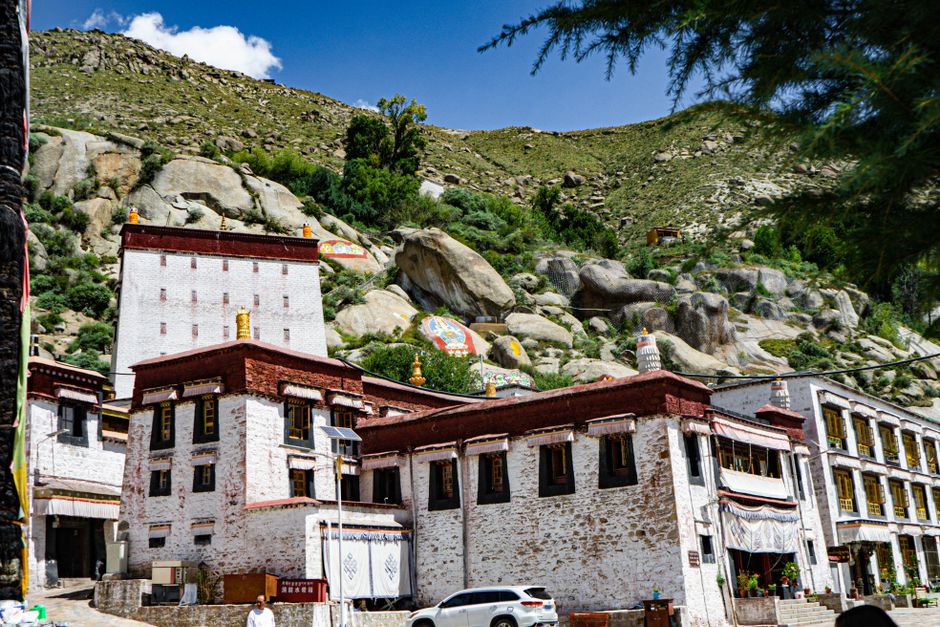
What Nobody Tells You Before You Go
The combined Bulguksa–Seokguram visit requires a minimum of four hours to do without rushing. Most organized tours allocate ninety minutes. That is enough time to photograph both pagodas and the Buddha and feel you have been somewhere significant. It is not enough time to understand why the stairway has 33 steps, why the two pagodas look nothing alike, or why a man in the 8th century built an entire grotto facing a specific compass bearing for a sunrise he would never live to see completed.
Gyeongju operates on a different tempo than Seoul. The city has a population of roughly 250,000 and no subway system. Bus schedules between Bulguksa and Seokguram run every 30 to 40 minutes in peak season. Missing the last bus down from Seokguram — which has happened to more foreign visitors than the tourist board would prefer to acknowledge — means either a 4-kilometer walk downhill in fading light or negotiating a taxi fare where English-speaking drivers are not guaranteed. The fix is simple: check the last bus time before you begin the ascent, photograph the schedule board at the Bulguksa bus stop, and save the Gyeongju City Tourism hotline number (054-779-6078) in your phone. English-language assistance is available during business hours.
The forest path between Bulguksa and Seokguram is a legitimate alternative to the bus — 3.5 kilometers uphill through cedar and pine, taking roughly 50 to 70 minutes depending on pace. In autumn (late October to mid-November), the canopy turns and the path becomes something else entirely. In summer, bring water. The humidity on the mountain in July and August is punishing, and there are no convenience stores between the two sites. Carry a Korean eSIM so you have access to maps, translation apps, and emergency contacts without hunting for WiFi.
The Language of Stone and the Silence Between Words
There is an irony embedded in the history of these sites that rarely appears in the brochures. When Seokguram was constructed in the 8th century, the theological content encoded in its carvings — the specific sequence of figures, the directional alignment, the mathematical proportions of the dome — was readable only to a small literate elite versed in Buddhist iconography and the classical Chinese texts that informed it. The vast majority of Silla-era Koreans who made the pilgrimage to this mountain could not read a single character of the scriptures the grotto was designed to embody.
And yet the grotto was built for them. The stone was the text. The image was the argument. The architecture was a sermon delivered to everyone regardless of whether they could decode a written syllable. Kim Daeseong did not build a library. He built a language that bypassed literacy entirely — one that a farmer standing at the chamber entrance in the 8th century and a foreign tourist standing at the glass barrier in the 21st century could receive through the same channel: the eyes, the body, the inexplicable sensation of standing before something made with complete seriousness.
The builders worked for seventeen years. Kim Daeseong died before either structure was completed. The state finished the work. Somewhere in that gap — between the man who conceived the vision and the hands that completed it without him — is the oldest story in human architecture: the people who begin the great things are almost never the people who finish them. The work outlasts the worker. The stone remembers nothing of the grief. It only holds the form.
That is either consoling or devastating, depending on where you are standing when you think about it.
Rover’s Take
A civilization that encodes its most sophisticated philosophical arguments in granite, aimed at an equinox sunrise, for people who cannot read — and that structure still works twelve centuries later — has nothing left to prove to anyone.