
Gyeongju (경주) has more UNESCO World Heritage sites packed into a single city than most countries have total. Jeonju (전주) feeds you better than almost anywhere else on the Korean peninsula. Spring — roughly late March through early May — is when both cities stop being good and start being extraordinary.
Here’s the problem most travelers don’t know about: these two cities sit about 170 kilometers apart in Korea’s southern region, yet almost nobody combines them into a single trip. That’s a mistake worth correcting.
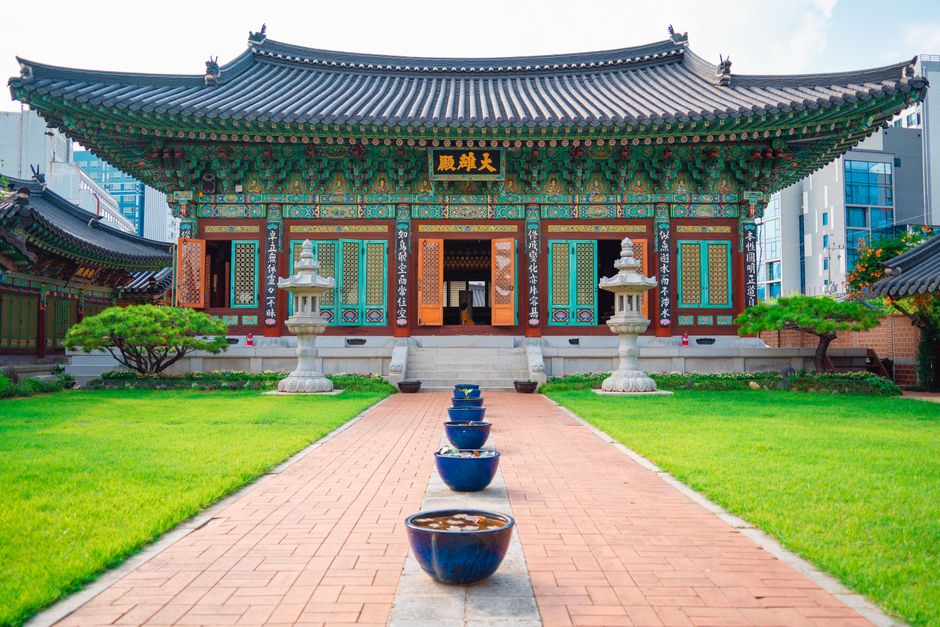
Gyeongju: Walking Through 1,000 Years Without a Map
Gyeongju was the capital of the Silla Kingdom (57 BCE – 935 CE) for nearly a thousand years. That’s longer than the entire history of the United States multiplied by four. The city didn’t just preserve its past — it buried it, literally. Royal tombs called tumuli (고분) rise from the ground like enormous green hills throughout the city center. You can walk between them in ordinary shoes on an ordinary afternoon.
The Daereungwon Tumuli Park (대릉원) contains 23 of these burial mounds within a single walled complex. The largest, Hwangnam Daechong (황남대총), stands 22 meters tall and stretches 80 meters across — roughly the length of an Olympic swimming pool lying on its side. Inside one accessible tomb, Cheonmachong (천마총), gold crowns and jade ornaments discovered in 1973 are displayed in situ-style replicas. The originals live in the Gyeongju National Museum.
📍 Daereungwon Tumuli Park (대릉원)
- Address: 9 Gyerim-ro, Gyeongju-si, Gyeongsangbuk-do
- Hours: 09:00 – 22:00 (last entry 21:30)
- Admission: Adults 3,000 KRW / Children 1,000 KRW
- Getting there: From Gyeongju Station, take Bus 10 or 11 to Tumuli Park stop (approx. 10 min)
- Official site: https://www.gyeongju.go.kr
In spring, the grounds surrounding the tombs fill with cherry blossoms. The contrast — ancient burial mounds ringed by pink petals — makes no logical sense and yet feels completely right. Peak bloom typically runs from late March to the first week of April, depending on the year’s temperature curve.
Bulguksa: The Temple That Took 200 Years to Build
Construction on Bulguksa Temple (불국사) began in 528 CE and continued, in various phases, for roughly two centuries. The stone staircases alone — Cheongungyo and Baegungyo (청운교·백운교) — are classified as National Treasure No. 23. You cannot walk on them. You look up at them from below, which is the point. They were designed to make you feel small before you entered the sacred space above.
The temple sits at roughly 200 meters elevation on the slopes of Mount Tohamsan (토함산). In spring, the mountain trails connecting Bulguksa to Seokguram Grotto (석굴암) — a 4-kilometer uphill walk — pass through forests of wild azaleas. The grotto itself houses an 8th-century granite Buddha statue, 3.5 meters tall, facing east toward the sea. Photography inside is not permitted. The experience of standing in front of it in silence is not something a photograph captures anyway.
📍 Bulguksa Temple (불국사)
- Address: 385 Bulguk-ro, Gyeongju-si, Gyeongsangbuk-do
- Hours: 07:00 – 18:00 (seasonal variation)
- Admission: Adults 6,000 KRW / Children 4,000 KRW
- Getting there: Book tours in advance or take Bus 10 or 11 from Gyeongju Station to Bulguksa stop (approx. 40 min)
- Official site: https://www.bulguksa.or.kr
📍 Seokguram Grotto (석굴암)
- Address: 873-243 Bulguk-ro, Gyeongju-si, Gyeongsangbuk-do
- Hours: 07:00 – 18:00 (seasonal variation)
- Admission: Adults 6,000 KRW / Children 4,000 KRW (combined ticket with Bulguksa available)
- Getting there: Shuttle bus from Bulguksa parking area, or 4 km uphill trail
- Official site: https://www.seokguram.org
Gyeongju National Museum: Where the Gold Actually Lives
The Gyeongju National Museum (국립경주박물관) holds over 30,000 artifacts from the Silla period. The gold crowns on display — some dated to the 5th century CE — were not symbolic props. Archaeological evidence suggests they were actually worn. The craftsmanship involves comma-shaped jade pieces (곡옥) and gold leaf cut into tree and antler shapes, assembled without modern tools. Stand in front of them long enough and you stop thinking about the museum altogether. You start thinking about the hands that made them.
📍 Gyeongju National Museum (국립경주박물관)
- Address: 186 Iljeong-ro, Gyeongju-si, Gyeongsangbuk-do
- Hours: Tue–Sun 10:00 – 18:00 (Sat until 21:00); closed Mondays
- Admission: Free (special exhibitions may charge separately)
- Getting there: Bus 10, 11, or 600 from Gyeongju Station
- Official site: https://gyeongju.museum.go.kr
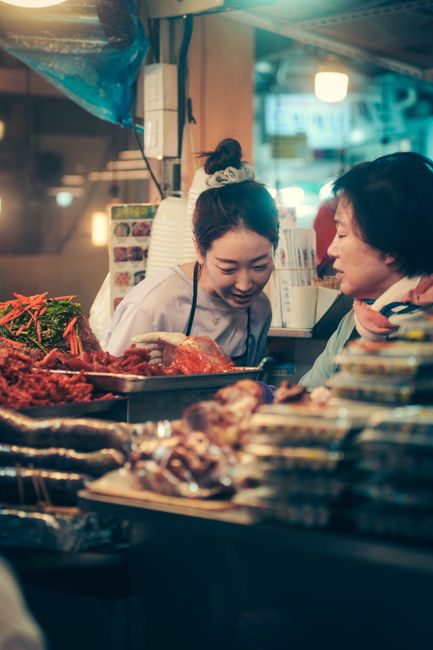
Jeonju: The City That Takes Food Seriously Enough to Have Rules About It
Jeonju was designated a UNESCO Creative City of Gastronomy in 2012 — one of only a handful of cities in Asia to hold that title. The designation isn’t marketing. It reflects a food culture so deeply embedded in daily life that locals will argue, at length, about the correct ratio of bean sprouts in a single dish.
The anchor of Jeonju’s food identity is bibimbap (비빔밥). Not the version served in airport lounges or hotel buffets. The original — Jeonju-style — involves rice cooked in beef bone broth, a raw egg yolk, at least 30 types of seasonal vegetables and garnishes, and a specific fermented chili paste (고추장) produced in the region. The bowl arrives warm. You mix it yourself. The first bite tastes different from the last because the ingredients keep redistributing heat and flavor as you eat.
Jeonju Hanok Village: 700 Traditional Houses, Zero Theme Park Energy
Jeonju Hanok Village (전주 한옥마을) contains approximately 700 traditional Korean wooden houses (한옥) within a single neighborhood. Unlike similar preserved districts elsewhere in Korea, this one is still largely residential. People live here. Restaurants operate in century-old buildings. In spring, the narrow alleys between hanok walls are lined with forsythia and plum blossoms — yellows and whites against dark wood and grey tile roofs.
You can walk the village end to end in about 25 minutes. But that’s not how you move through it. You stop. You eat. You stop again.
📍 Jeonju Hanok Village (전주 한옥마을)
- Address: Girin-daero, Wansan-gu, Jeonju-si, Jeollabuk-do
- Hours: Open 24 hours (individual shops and restaurants vary)
- Admission: Free
- Getting there: From Jeonju Station, take Bus 79 or 119 to Hanok Village stop (approx. 15 min); taxi from station approx. 10 min
- Official site: https://www.jeonju.go.kr
Nambu Market: Where Jeonju Actually Eats
Tourists go to the Hanok Village. Locals go to Nambu Market (남부시장). The night market section — operating Friday and Saturday evenings from roughly 18:00 to 23:00 — draws both. The difference between the two crowds is visible: tourists photograph the food first. Locals eat it first and don’t photograph it at all.
The market’s most talked-about item is chungmu gimbap (충무김밥) — small, plain rice rolls served with spicy radish kimchi and squid. But Nambu’s real draw is volume and variety: bindaetteok (빈대떡, mung bean pancakes), jeon (전, Korean-style savory pancakes), and makgeolli (막걸리, unfiltered rice wine) served in ceramic bowls. The price point is low enough that ordering wrong costs you almost nothing.
📍 Nambu Market (남부시장)
- Address: 44 Pungnam-ro 1-ga, Wansan-gu, Jeonju-si, Jeollabuk-do
- Hours: Daily 08:00 – 20:00; Night Market Fri–Sat 18:00 – 23:00
- Admission: Free
- Getting there: 10-minute walk from Jeonju Hanok Village; Bus 79 or 119 from Jeonju Station
- Official site: https://www.nambumarket.kr

The Practical Layer: What Nobody Warns You About
Getting Between the Two Cities
Gyeongju and Jeonju are not on the same train line. The most efficient route between them involves traveling to Daejeon or Dongdaegu by KTX and transferring. Total travel time runs approximately 2.5 to 3.5 hours depending on connections. Budget travelers can take an intercity bus — direct routes exist but are less frequent. Check schedules at least a day in advance during spring holidays, when seats sell out fast. When traveling between regions, stay connected with a Korean eSIM so you can pull up real-time transit information and maps without hunting for Wi-Fi.
Real Scenario: Language Barrier at a Traditional Restaurant
Here’s a situation that happens more than once per week to foreign visitors in Jeonju: you walk into a small restaurant in the Hanok Village. There is no English menu. The owner speaks no English. You point at the table next to you. The owner nods. Food arrives. You have no idea what you ordered, and it is the best thing you’ve eaten in years.
That scenario ends well. The harder version: you have a food allergy. Shellfish, peanuts, and gluten are the most common issues. The Korean word for allergy is 알레르기 (al-le-reugi). Saying it clearly, then pointing at the ingredient you’re avoiding, works better than showing a translation app to a 70-year-old restaurant owner who has never used a smartphone. Carry a written card — prepared before you leave home — that states your allergy in Korean. Pharmacies in both cities are marked with a green cross; staff typically have basic English or a translation tablet. If a reaction occurs, the nearest emergency room in Gyeongju is at Dongguk University Gyeongju Hospital; in Jeonju, at Jeonbuk National University Hospital. Both run 24-hour emergency departments.
Spring Crowds and Timing
Cherry blossom season draws domestic Korean tourists in numbers that can turn a 10-minute walk into a 30-minute shuffle. In Gyeongju, the Bomun Lake area (보문호) and the roads through the Historic Areas fill fastest on weekends between late March and early April. In Jeonju, the Hanok Village alleyways peak on Saturday afternoons. Arriving before 09:00 or after 17:00 on weekdays changes the experience entirely. The light is better anyway.
Spring in Gyeongju and Jeonju isn’t a backdrop. It’s a participant. The season pushes through every crack in the ancient walls, and the food tastes different when you’re cold enough to need it.
Rover’s Take
Two cities, one trip, zero wasted days — and the only real mistake is treating either of them as a checklist rather than a place where time moves at a different speed than you’re used to.