
A Netflix algorithm doesn’t care about your bucket list. But 73 million non-Korean households watched a K-drama in 2023 alone — and a measurable percentage of them booked flights afterward. Not to see Seoul. To stand exactly where their favorite scene was filmed.
That’s not tourism. That’s pilgrimage.
The difference matters. Pilgrims don’t browse. They arrive with coordinates already memorized, ready to feel something specific in a specific place. The K-drama filming location industry understands this better than most national tourism boards. South Korea has turned set geography into infrastructure.
Here’s what the travel brochures don’t tell you: most of these locations are brutally ordinary when you arrive without context. A staircase. A market alley. A bench beside a river. The drama is what made them sacred. And that’s exactly why visiting them — really visiting them, not just photographing a sign — requires more than a map pin.
It requires knowing the three words that define every great filming location tour: despair, trial, and inspiration. Every location on this list was chosen because it carries all three — in the story that was filmed there, and in the experience of reaching it.
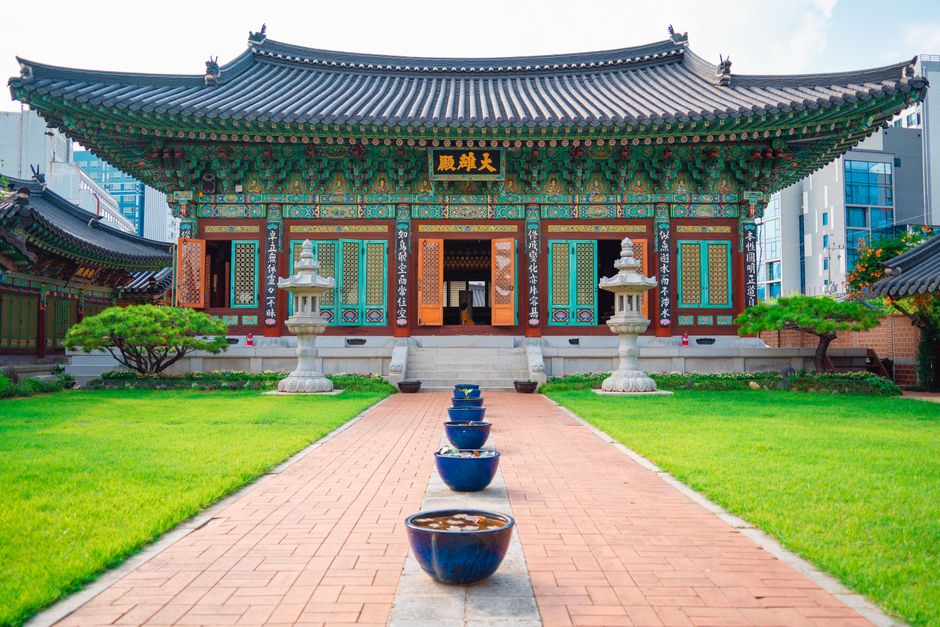
Bukchon Hanok Village (북촌한옥마을): Where Every Drama Goes to Look Timeless
Bukchon Hanok Village has appeared in so many K-dramas that locals have started calling it “the default setting.” That’s not a compliment. It’s a diagnosis. When a director needs visual shorthand for “traditional Korea,” the curved rooflines of Bukchon’s 900-year-old hanok (traditional wooden houses) appear within 48 hours of the script being greenlit.
The despair of Bukchon is quiet. By 2022, the Seoul Metropolitan Government had received over 3,400 resident complaints about noise from tourists — a number that led to strict quiet zones enforced from 10 AM to 5 PM daily. The people who actually live here are trapped inside a postcard. They wake up to strangers photographing their front doors.
The trial of getting here is real for first-time visitors. The village sits on a steep hill between Gyeongbokgung Palace (경복궁) and Changdeokgung Palace (창덕궁), and the lanes are not grid-based. Phones lose signal in the lower alleys. The famous “Bukchon 8 Views” — the eight official scenic points mapped by Seoul Tourism — are marked, but the path between them is not intuitive. Budget 90 minutes minimum. Not 30.
The inspiration arrives at View Point 2, on Gahoe-ro 11-gil. Stand there at 7:15 AM before the tour groups arrive. The rooflines stack against each other like sentences in a language you almost understand. My Love from the Star, Secret Garden, Jewel in the Palace — they all borrowed this exact grammar.
📍 Bukchon Hanok Village (북촌한옥마을)
- Address: Gyedong-gil, Jongno-gu, Seoul
- Hours: Outdoor village accessible 24 hours; quiet zone enforced 10:00 AM – 5:00 PM
- Admission: Free (outdoor area)
- Getting there: Subway Line 3, Anguk Station (안국역), Exit 2 — 5-minute walk
- Official site: https://bukchon.seoul.go.kr
Nami Island (남이섬): The Place That Built Its Mythology Deliberately
Winter Sonata aired in 2002. It was not the most-watched drama of its year in Korea. It became, by 2004, the catalyst for a Japanese tourism wave that injected an estimated ₩3 trillion into the Korean economy — a figure cited repeatedly by the Korea Tourism Organization in subsequent policy documents. One island. One drama. Twenty-two years of continuous pilgrimage.
Nami Island is not a natural wonder. It’s a half-moon shaped river island in the North Han River, 63 kilometers from Seoul, accessible only by ferry or zipline. The tree-lined paths where Bae Yong-joon and Choi Ji-woo walked in Winter Sonata are still there, still maintained, still photographed by visitors from Japan, China, Thailand, and increasingly, Europe and the Americas. The island’s management company — Naminara Republic, which declared itself an independent “nation” in 2006 as a branding exercise — has never stopped investing in the mythology.
That branding decision is the inspiration. In a world drowning in content, Nami Island chose to become a story rather than a destination. It issues its own “passports.” It has an official flag. It works. The despair is that it works almost too well: weekend queues for the ferry in autumn (October–November, when the ginkgo trees turn gold) can exceed 45 minutes. The trial is the 90-minute journey from Seoul, which requires a bus or train to Gapyeong Station (가평역) followed by a local shuttle.
Go on a Tuesday in November. The trees are still gold. The queues are not.
📍 Nami Island (남이섬)
- Address: 1 Namisum-gil, Namisan-myeon, Chuncheon-si, Gangwon-do
- Hours: 8:00 AM – 8:00 PM (last ferry varies seasonally)
- Admission: ₩16,000 for adults (includes round-trip ferry); as of 2024
- Getting there: ITX-Cheongchun train from Yongsan Station (용산역) to Gapyeong Station, then shuttle bus or taxi to ferry dock — approximately 90 minutes total
- Official site: https://namisum.com

Ihwa Mural Village (이화마을): The Staircase That Survived Demolition Twice
In 2006, Seoul city workers painted a mural of two large fish on a staircase in Ihwa-dong, a hillside neighborhood just east of Naksan Park (낙산공원). The neighborhood was slated for redevelopment. The murals were meant to soften the blow.
They did something else entirely. Tourists arrived. Cafés opened. The demolition was postponed, then canceled. A staircase saved a neighborhood — and that staircase has since appeared in Goong, Reply 1988, and a dozen music videos. The fish mural itself was vandalized in 2008 and repainted. It survived because people cared enough to restore it. That is the whole story of Ihwa in miniature: despair, trial, and then the stubborn refusal to disappear.
For foreign visitors, the practical challenge is that Ihwa Mural Village is not well-signed in English. The neighborhood sits on a steep slope, and the “village” is actually a network of narrow residential alleys. Residents still live here. This is not a theme park. The unspoken rule: photograph walls, not windows. Walk quietly after 9 PM.
The Reply 1988 filming street — Ssangmun-dong (쌍문동) in the drama, but shot partly in Ihwa and partly in Dobong-gu — draws visitors who grew up watching the show and arrive expecting to feel 1988 in their bones. Some do. The alley is narrow enough that the past feels close.
📍 Ihwa Mural Village (이화마을)
- Address: Ihwa-dong, Jongno-gu, Seoul (enter via Naksan Park path)
- Hours: Outdoor area, accessible at all hours
- Admission: Free
- Getting there: Subway Line 4, Hyehwa Station (혜화역), Exit 2 — approximately 15-minute walk uphill
- Official site: https://www.jongno.go.kr (Jongno District Office tourism section)
Petite France (쁘띠프랑스): The Absurdity That Became Essential
There is a French-themed cultural village in the mountains of Gyeonggi Province, 60 kilometers from Seoul, that has appeared in My Love from the Star, Secret Garden, and Running Man. It contains a Saint-Exupéry museum, a puppet theater, and buildings painted in colors that have never existed in actual France.
It should not work. It absolutely works.
Petite France opened in 2008 as a cultural exchange facility. By 2013, after My Love from the Star aired its rooftop scenes here, visitor numbers jumped by an estimated 40% year-on-year according to the facility’s own reporting. The location’s genius — accidental or not — is that its unreality makes it cinematic. A drama set in a world where an alien lives among humans for 400 years doesn’t need a realistic backdrop. It needs a place that already looks like a dream someone half-remembered.
The trial for foreign visitors is purely logistical. Petite France is not on the Seoul subway network. Getting here requires either a rental car, a taxi from Cheongpyeong Station (청평역), or a dedicated tour bus. The journey from central Seoul takes 75–90 minutes. The admission price is steeper than most Seoul attractions. None of this has reduced the queues on weekends.
Come for the My Love from the Star rooftop. Stay for the surreal experience of standing in a fake French village in Korean mountains, surrounded by visitors from twelve different countries, all of whom understand exactly why they’re here.
📍 Petite France (쁘띠프랑스)
- Address: 1063 Hoban-ro, Cheongpyeong-myeon, Gapyeong-gun, Gyeonggi-do
- Hours: 9:00 AM – 6:00 PM daily
- Admission: ₩12,000 for adults (as of 2024)
- Getting there: ITX-Cheongchun from Yongsan Station to Cheongpyeong Station, then taxi (approximately 10 minutes) — total journey about 75 minutes from central Seoul
- Official site: https://www.pfcamp.com
When the Language Barrier Becomes the Emergency
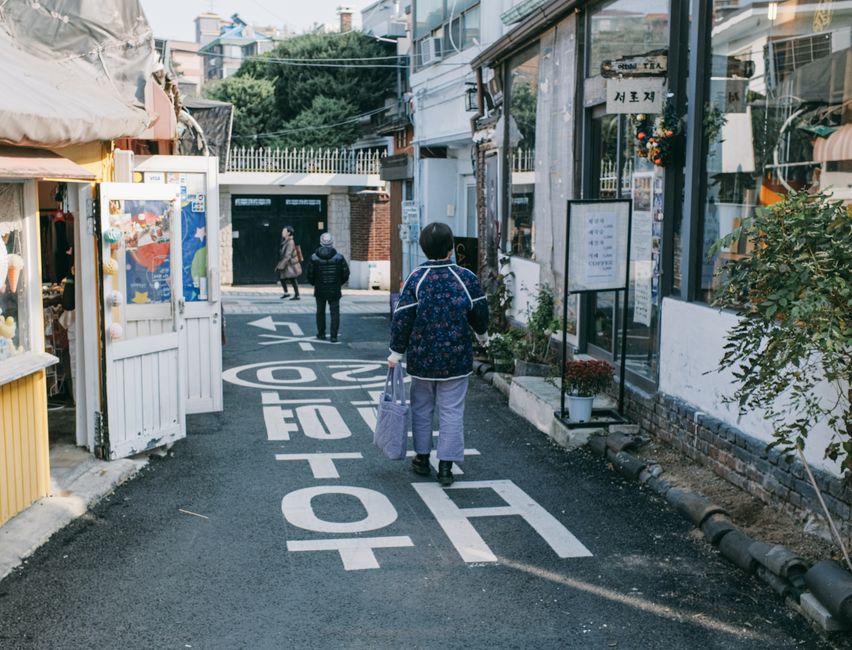
Here is the scenario nobody puts in the travel guide: you’re at Petite France at 4:45 PM, the last shuttle has left, your phone battery is at 6%, and the taxi app won’t load because your roaming data ran out somewhere between Nami Island and here. The staff at the entrance speaks limited English. The nearest convenience store with a charging cable is a 20-minute walk down a mountain road.
This happens. Not rarely.
The practical answer: Korea’s nationwide tourism helpline operates 24 hours a day, 365 days a year, in English, Chinese, Japanese, and other languages. The number is 1330. It works from any Korean phone or SIM. The operators can call taxis on your behalf, translate for medical staff, and locate the nearest open pharmacy. In a country where 73% of rural service workers report limited English proficiency (Korea Tourism Organization survey data, 2022), this number is not optional. It’s infrastructure.
A second practical note: the T-money (티머니) transit card, available at every convenience store and subway station for ₩3,000 plus deposit, works on buses, subways, and some taxis across the country. Loading it with ₩30,000–₩50,000 before leaving Seoul for a filming location day trip eliminates the single most common logistical failure point for foreign visitors. Consider using day trips and tour booking services to streamline your itinerary planning.
Gyeongbokgung Palace (경복궁): The Location That Was Always the Main Character
Mr. Sunshine used Gyeongbokgung as its moral center. The King: Eternal Monarch opened with it. Jewel in the Palace spent three seasons inside its walls. The palace is not a backdrop. In Korean period drama, it is the argument — the physical evidence that something worth fighting for once existed here.
Built in 1395, destroyed by Japanese colonial forces, and painstakingly reconstructed over decades — restoration work continues as of 2024, with an official target completion year of 2045 — Gyeongbokgung is the most visited paid historical site in South Korea. In 2023, it received approximately 3.73 million visitors, according to the Cultural Heritage Administration of Korea.
The despair is architectural: only about 30% of the original structures have been rebuilt. The trial is the scale — the palace complex covers 410,000 square meters, and most visitors see 15% of it. The inspiration is Gwanghwamun Gate (광화문), the main entrance, at sunrise. At 6:00 AM in October, with mist coming off the surrounding mountains and the gate lit against a grey sky, the drama makes itself.
One detail foreign visitors consistently miss: hanbok (한복) rental shops cluster around all four palace gates, and visitors wearing hanbok enter free of charge. For a ₩20,000–₩30,000 rental fee, the admission cost is covered and the photographs become something else entirely. The math is obvious. The experience is not about the math. To stay connected throughout your journey, consider getting a Korean eSIM for seamless mobile data access.
📍 Gyeongbokgung Palace (경복궁)
- Address: 161 Sajik-ro, Jongno-gu, Seoul
- Hours: 9:00 AM – 6:00 PM (March–October until 6:30 PM); closed Tuesdays
- Admission: ₩3,000 for adults; free with hanbok rental
- Getting there: Subway Line 3, Gyeongbokgung Station (경복궁역), Exit 5 — 1-minute walk
- Official site: https://www.royalpalace.go.kr
The Honest Itinerary: What Two Days Actually Gets You
Travel content consistently overpromises on K-drama location tours. “5 filming locations in one day” itineraries exist in abundance. They are, without exception, written by people who have never tried to execute them with a transit card and no rental car.
A realistic two-day framework for a first-time visitor based in central Seoul:
- Day 1 (Seoul-only): Gyeongbokgung at 9:00 AM (2 hours) → Bukchon Hanok Village on foot (90 minutes) → Ihwa Mural Village via taxi (45 minutes travel, 1 hour on-site) → Cheonggyecheon Stream (청계천) evening walk. Total transit time: under 90 minutes cumulative.
- Day 2 (Gyeonggi day trip): Depart Yongsan Station by 8:30 AM ITX → Nami Island (3 hours) → Petite France by taxi from Gapyeong (30 minutes) → return to Seoul by 7:00 PM. This itinerary has a 15-minute margin for delays. It requires no margin to work.
The Cheonggyecheon Stream appears in more K-dramas than any single production team could catalog — Signal, Descendants of the Sun, While You Were Sleeping — and it costs nothing to walk. It is 5.8 kilometers of restored urban waterway running through central Seoul. At night, the lantern installations reflect off the water with the kind of cinematography that requires no director.
📍 Cheonggyecheon Stream (청계천)
- Address: Cheonggyecheon-ro, Jung-gu, Seoul (main entrance near Cheonggye Plaza)
- Hours: Open 24 hours
- Admission: Free
- Getting there: Subway Line 1 or 2, City Hall Station (시청역), Exit 4 — 3-minute walk to Cheonggye Plaza entrance
- Official site: https://cheonggye.seoul.go.kr
The locations were always there. The dramas made you capable of seeing them. That’s not a small thing. That’s the entire mechanism of how stories change geography.
Rover’s Take
Seventy-three million households watched their way to a flight booking — and the most honest thing you can say about K-drama tourism is that the shows did what a thousand government campaigns couldn’t: they made strangers feel like they already knew the place before they arrived.