
Most travelers pack wrong. They bring too much of what they don’t need and arrive without the one thing that would have saved them.
2026 Korea Travel: The Essential Packing List and Practical Tips That Actually Matter
Korea in 2026 is not the same country it was three years ago. The tourist infrastructure has expanded, the crowds have shifted, and the systems — transportation, payment, communication — have quietly evolved in ways that will catch you off guard if you show up unprepared. This is not a list of suggestions. This is what separates a smooth trip from a preventable disaster.
The Card in Your Wallet Might Not Work Here
Foreign credit cards are accepted more widely than ever in Seoul (서울), but the moment you step outside the major districts — into a traditional market, a countryside guesthouse, a temple entrance booth — cash becomes the only language spoken. As of 2025, roughly 30% of small vendors in non-urban areas still operate cash-only, according to Korea Tourism Organization data. Bring Korean won (₩). Withdraw it from a GS25 or CU convenience store ATM, which accept foreign cards when most bank ATMs refuse them. The exchange rate difference between airport kiosks and in-city ATMs can run 3–5%. That gap adds up across a two-week trip.
One more thing about payments: T-money cards. A single rechargeable transit card covers subway, bus, and even some taxis across the entire country. Load ₩50,000 at any convenience store. Tap in. Tap out. No fumbling for exact change at 11 PM on a platform in Busan (부산).
Your Phone Is Useless Without This
Roaming plans from home carriers charge between $10–$15 per day for data that throttles after 500MB. A Korean SIM card purchased at Incheon International Airport (인천국제공항) runs approximately ₩33,000–₩55,000 for 10–30 days of unlimited LTE. The math is not complicated. Alternatively, you can grab a local eSIM before departure for seamless connectivity throughout your stay. Pocket Wi-Fi rentals are another option — ₩8,000–₩12,000 per day — but they require charging, carrying, and returning. A SIM card disappears into your phone and does its job invisibly.
Download these before you land: Naver Maps (카카오맵 works too, but Naver is more accurate for transit), Papago for real-time translation, and KakaoTaxi for hailing cabs without saying a word. Google Maps still misreads Korean transit routing in 2025. Don’t rely on it for subway transfers.

The Scenario Nobody Warns You About: Medical Emergency at Midnight
It happens more than the travel blogs admit. A bad piece of street food. A twisted ankle on the uneven stone paths of Bukchon Hanok Village (북촌한옥마을). A fever that spikes at 2 AM in a Hongdae (홍대) guesthouse. Korea’s public healthcare system is efficient and relatively affordable by global standards — a standard clinic visit without insurance runs ₩30,000–₩80,000 — but navigating it without preparation is its own ordeal.
Carry a printed card listing your blood type, known allergies, and any medications you take regularly. Korean pharmacists are remarkably helpful and many speak functional English, but a handwritten note in Korean — easily generated via Papago before you leave — removes all ambiguity. For after-hours emergencies, the number is 119. It connects to ambulance services and has English-speaking operators available around the clock. Severance Hospital (세브란스병원) in Seoul and Asan Medical Center (서울아산병원) both operate international patient centers with full English support.
📍 Severance Hospital International Healthcare Center
- Address: 50-1 Yonsei-ro, Seodaemun-gu, Seoul
- Hours: Monday–Friday 08:30–17:30
- Admission: Fee varies by treatment
- Getting there: Sinchon Station (Line 2), Exit 3, 10-minute walk
- Official site: https://severance.severance.or.kr/international
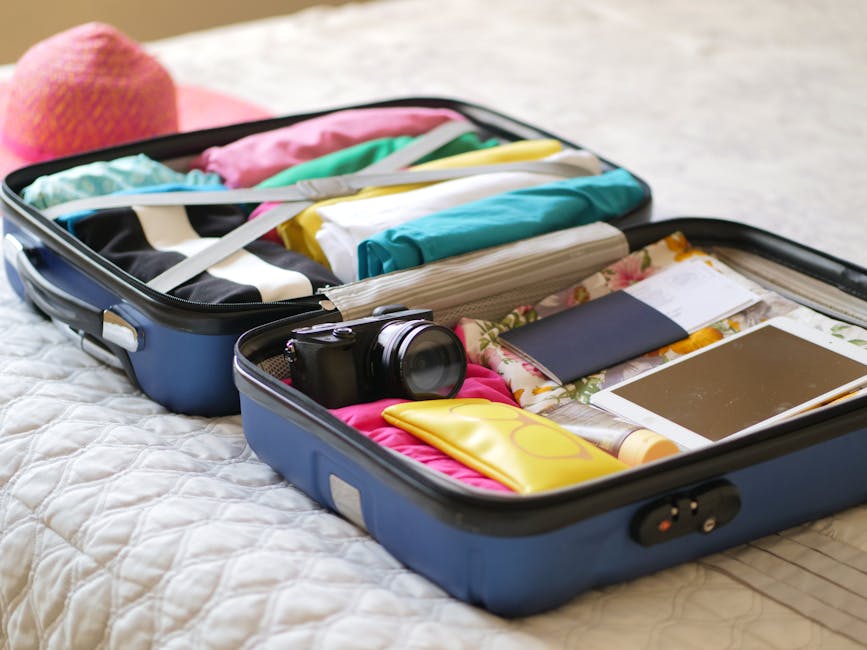
What to Actually Pack: The Non-Obvious List
The obvious items — adaptor (Korea uses Type C/F, 220V), comfortable walking shoes, layers for unpredictable spring and autumn weather — are covered in every generic travel guide. Here is what those guides skip.
- Portable battery pack (minimum 10,000mAh): You will use your phone constantly for navigation, translation, and payment. A dead phone in a subway station with no English signage is a specific kind of helplessness.
- Foldable tote bag: Korean markets and supermarkets charge for plastic bags — every single one. A compact reusable bag weighs nothing and eliminates a daily friction point.
- Blister pads: Seoul’s walking distances are deceptive. A single day from Insadong (인사동) to Gyeongbokgung Palace (경복궁) to Namsan Tower (남산타워) can exceed 18,000 steps. Blisters appear by day three. Treat them before they start.
- Printed hotel address in Korean: Taxi drivers outside tourist zones frequently cannot read English addresses on phone screens. A printed Korean address — again, via Papago — costs nothing and ends arguments before they begin.
- Prescription medication documentation: Certain medications legal in your home country are controlled substances in Korea. Carry a doctor’s letter. Customs does check.

The Language Gap Is Real, and It Has a Shape
Korea’s literacy rate sits above 98% — one of the highest in the world. But literacy in Korean and literacy in English are entirely different measures. Outside Seoul’s central districts and major tourist corridors, English signage drops sharply. In rural areas, in local restaurants without picture menus, in bus terminals outside the capital, the language gap becomes a physical barrier. This is not a criticism. It is a geographic fact.
The travelers who navigate it best are not the ones who speak Korean. They are the ones who arrive with a system: a translation app that works offline (Papago’s offline Korean pack is under 200MB), a willingness to point and gesture without embarrassment, and a basic set of phonetic phrases written on a card in their pocket. “Eolmayeyo?” means “How much?” Knowing three words shifts the entire dynamic of an interaction.
The language barrier in Korea is not a wall. It is a door that opens from the inside — and the key is showing up with patience instead of expectation.
The Seasonal Variable That Changes Everything
Korea’s four seasons are not marketing copy. They are meteorological facts with real consequences for packing. Spring (March–May) averages 10–18°C but swings 12 degrees between morning and afternoon. Summer (June–August) brings humidity that makes 32°C feel like 38°C, plus monsoon rains that arrive without warning in July. Autumn (September–November) is the most forgiving season — stable temperatures, low humidity, peak foliage. Winter (December–February) in Seoul regularly drops to -10°C, with wind chill that makes it feel colder than Stockholm on a bad day.
Pack for the swing, not the average. A lightweight down jacket with a packable compression bag weighs 400 grams and replaces three layers of clothing in every shoulder-season scenario. Umbrella: compact, windproof. The cheap ones sold outside subway exits survive exactly one Korean summer storm.
Lost Items and What Actually Happens
Korea’s lost-and-found culture is statistically unusual. Items left on subway trains are recovered and logged at a rate that would seem implausible in most major cities. The Seoul Metro Lost and Found Center processes thousands of items per month, and the recovery rate for registered items is high. If you leave something on a train, report it immediately at the station stationmaster’s office or call 1577-1234 (Seoul Metro inquiry line). Describe the item, the line, the approximate time. The system works — but only if you engage it within the first 24 hours.
Passports are a different category. If yours goes missing, your nearest embassy is the first call to make, not the police — though a police report (issued at any local station, free of charge) is required for the replacement process. The U.S. Embassy in Seoul issues emergency passports within one to three business days for documented cases.
📍 U.S. Embassy Seoul
- Address: 188 Sejong-daero, Jongno-gu, Seoul
- Hours: Monday–Friday 08:00–17:00 (American Citizen Services)
- Admission: N/A
- Getting there: Gwanghwamun Station (Line 5), Exit 7
- Official site: https://kr.usembassy.gov
The One Booking You Cannot Leave to Chance
Accommodation in Seoul during cherry blossom season (late March to mid-April) and autumn foliage peak (mid-October to early November) sells out six to ten weeks in advance. Not days. Weeks. Budget guesthouses in Hongdae or Myeongdong (명동) that run ₩40,000–₩60,000 per night in February will be fully booked — or priced at ₩90,000 and above — by the time peak season arrives. Book tours in advance and secure your accommodation early, or accept the consequence: a commute from a district you never planned to stay in.
For first-time visitors, Myeongdong puts you within walking distance of Namsan and the central shopping corridor. For those who have been before, Euljiro (을지로) offers a grittier, more local texture — converted industrial spaces, independent coffee shops, late-night pojangmacha (포장마차) stalls — at lower prices and with far fewer tour groups at breakfast.
Rover’s Take
Korea will reward the traveler who prepares with precision and punish the one who assumes it will all work out — because it mostly will, right up until the moment it doesn’t, and that moment always comes at midnight, in the rain, with a dead phone and a taxi driver who has never heard of your hotel.