
Seoul doesn’t sleep. Neither does its street food scene. By 9 PM, the real city reveals itself — smoke curling off iron griddles, red lanterns swaying above narrow alleys, the sharp crack of soju bottles meeting plastic cups. Korea’s night market culture isn’t a tourist attraction. It’s a survival mechanism that’s been feeding workers, students, and night owls for over a century.
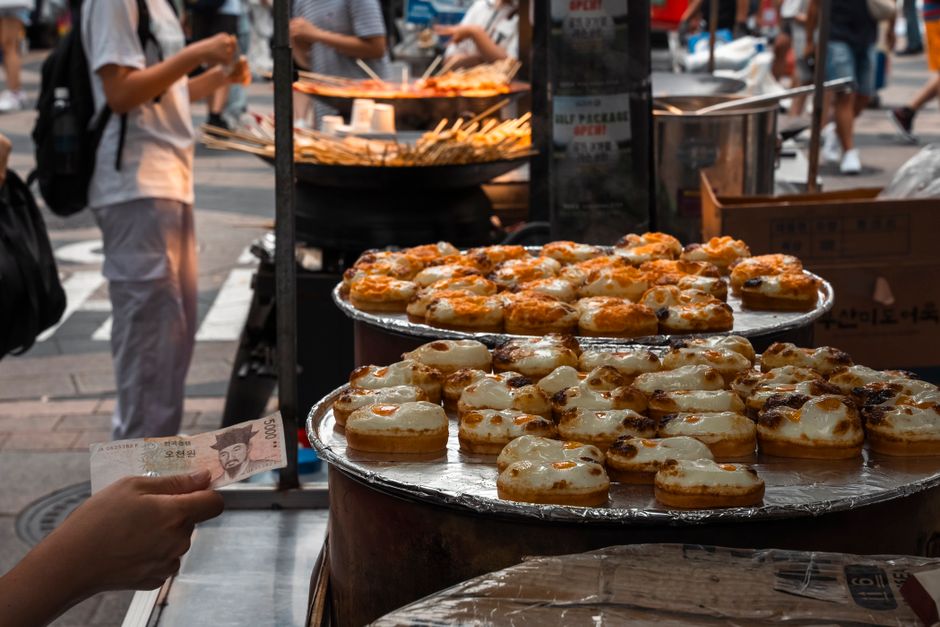
What a Korean Night Market Actually Is (And What It’s Not)
Foreign visitors often arrive expecting something like a Thai night market or a Taiwanese night bazaar — long rows of stalls, fixed prices, photo-friendly lighting. Korean night markets, called yasijang (야시장) or more commonly experienced through the pojangmacha (포장마차) culture, operate differently. There’s no central authority. No admission fee. No map.
A pojangmacha is a tent stall — literally “wrapped horse cart,” a nod to its origins as a mobile food cart. Today it ranges from a vinyl-covered folding table on a sidewalk to a semi-permanent structure with gas burners, plastic stools, and a handwritten menu. The food is cheap. The atmosphere is loud. The lighting is deliberately dim.
Korea’s night market scene clusters around three formats: permanent market extensions (like Gwangjang Market (광장시장) staying open past dark), seasonal pop-up night markets organized by local governments, and the spontaneous pojangmacha strips that materialize nightly in entertainment districts. Each has its own rules, its own food, its own crowd.
The pojangmacha isn’t a restaurant with worse furniture. It’s a different institution entirely.
The Five Dishes You’ll Actually Encounter
Forget the curated lists. Here’s what’s on every grill, every night, across every major city.
1. Tteokbokki (떡볶이) — The Anchor Dish
Cylindrical rice cakes in a gochujang-based sauce, the color of rust, sticky enough to coat your fingers through the skewer. Spice level varies wildly by vendor. A standard portion runs 3,000–5,000 KRW (approximately $2.20–$3.70 USD as of 2024). It’s the dish that anchors every pojangmacha menu. Order it first. Everything else follows.
2. Eomuk (어묵) — The Free Drink Trick
Fish cake skewers simmering in a light broth. Most vendors let you drink the broth for free from a communal pot. This is not a tourist perk. It’s standard practice. The broth — faintly saline, faintly sweet — is half the point.
3. Sundae (순대) — Not What You Think
Korean blood sausage stuffed with glass noodles and vegetables. Pronounced “soon-dae,” not like the dessert. First-time foreign visitors frequently order it expecting something sweet. The face they make is always the same.
4. Hotteok (호떡) — The Winter Staple
Pan-fried dough filled with brown sugar, cinnamon, and crushed peanuts — the inside molten, the outside blistered and crisp. Peak season runs November through February. A single piece costs 1,000–1,500 KRW (about $0.75–$1.10 USD). The queue at a good hotteok stall in winter moves at roughly one customer per 90 seconds. It’s worth every second of it.
5. Pajeon (파전) — The Rain Dish
Green onion pancake, golden at the edges, chewy at the center. There’s a widely held Korean belief that pajeon tastes better on rainy days — the sound of rain drumming on a tent roof is said to mimic the sizzle of batter hitting hot oil. Whether this is meteorology or mythology, pojangmacha vendors consistently report sales spikes during rainfall. The belief is self-fulfilling, and nobody seems to mind.
Where to Go: Three Night Market Zones That Actually Deliver
📍 Gwangjang Market (광장시장) — Night Extension
- Address: 88 Changgyeonggung-ro, Jongno-gu, Seoul
- Hours: Daily 9:00 AM – 11:00 PM (inner stalls vary; outer pojangmacha often run until midnight)
- Admission: Free
- Getting there: Jongno 5-ga Station (Line 1), Exit 8 — 2-minute walk
- Official site: http://www.gwangjangmarket.co.kr
Gwangjang is the oldest continuously operating market in Korea, established in 1905. By day it sells fabric and vintage clothing. By night the inner food hall transforms into one of the densest concentrations of bindaetteok (mung bean pancake) and mayak gimbap in the country. The vendors here are not performing for cameras. They’re working.
📍 Busan Bupyeong Kkangtong Market (부평깡통시장) Night Market
- Address: 31 Bupyeong 1-gil, Jung-gu, Busan
- Hours: Night market section: Friday–Sunday