
Korea has 16 UNESCO World Heritage Sites. That number puts it ahead of Egypt, ahead of Mexico, ahead of most countries that have been building civilizations far longer. And yet most foreign visitors see maybe two of them — Gyeongbokgung (경복궁) and Bulguksa (불국사) — and call it done.
That’s not a trip. That’s a postcard.
The full picture is stranger, older, and far more unsettling than the brochures suggest. Some of these sites survived wars, occupations, and deliberate erasure. Others were forgotten entirely for centuries before archaeologists even noticed them. Walking through them without knowing the story is like reading a novel with every other page torn out.
This guide exists to put those pages back.
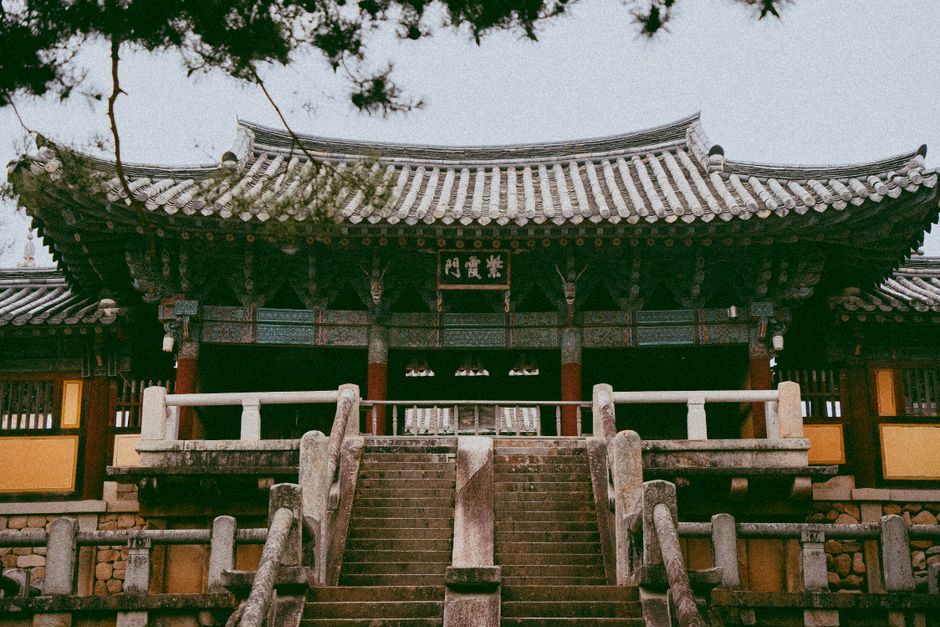
The Palaces: Power Built in Wood and Silence
Joseon Dynasty (조선왕조) architects made a deliberate choice: no stone for the main halls. Wood, clay tile, and painted beams — materials that burn. And burn they did, repeatedly, across five centuries. Gyeongbokgung was torched during the Japanese invasion of 1592, left as a ruin for 273 years, rebuilt in 1867, then systematically dismantled again under Japanese colonial rule after 1910. What stands today is a reconstruction of a reconstruction. And still it stops people cold.
The complex covers 410,000 square meters — roughly 57 football fields. At its peak in the late Joseon period, it housed over 500 individual buildings. Fewer than 100 remain or have been restored. The math of what was lost is staggering.
“The building that burned was not the original. The original burned before that. What you’re mourning is already a copy of grief.”
Changdeokgung (창덕궁) is the one that actually made UNESCO’s list, inscribed in 1997. The reason isn’t the throne room — it’s the Huwon (후원), the Secret Garden behind the palace. Fifty-seven hectares of ponds, pavilions, and ancient trees, some over 300 years old. The garden was designed to follow the natural topography rather than impose geometry on it. In an era when every other imperial garden in Asia was an exercise in dominating nature, Joseon’s royal retreat was about conversing with it.
That detail alone is worth the entrance fee.
📍 Gyeongbokgung Palace (경복궁)
- Address: 161 Sajik-ro, Jongno-gu, Seoul
- Hours: 09:00–18:00 (Mar–Oct until 18:30); closed Tuesdays
- Admission: ₩3,000 adults; free with hanbok rental
- Getting there: Gyeongbokgung Station (Line 3), Exit 5
- Official site: http://www.royalpalace.go.kr
📍 Changdeokgung Palace (창덕궁)
- Address: 99 Yulgok-ro, Jongno-gu, Seoul
- Hours: 09:00–17:30 (season-dependent); closed Mondays
- Admission: ₩3,000; Secret Garden tour ₩8,000 (reservation required)
- Getting there: Anguk Station (Line 3), Exit 3
- Official site: http://www.cdg.go.kr
The Temples: Enlightenment at 800 Meters Above Sea Level
Bulguksa (불국사) and Seokguram Grotto (석굴암) were inscribed together in 1995 as a single UNESCO entry. They sit 4 kilometers apart on the slopes of Mount Tohamsan (토함산) in Gyeongju (경주), and together they represent something Korean Buddhism spent 200 years trying to build: a physical model of the Buddhist universe.
Bulguksa’s stone staircases — Cheongun-gyo (청운교) and Baekun-gyo (백운교) — aren’t decorative. They’re cosmological. You ascend from the human realm into the Buddha’s realm with each step. The bridge’s 33 stairs correspond to the 33 heavens in Buddhist cosmology. Most visitors walk past the placard explaining this and keep moving. The ones who stop tend to stay a long time.
Seokguram is the harder conversation. The granite rotunda housing a 2.5-meter seated Buddha was built in 751 CE by a government minister named Kim Daeseong (김대성), who — according to the Samguk Yusa (삼국유사), Korea’s 13th-century historical chronicle — commissioned it to honor his parents from a previous life. Whether you believe in reincarnation or not, a man building an architectural masterpiece to repay a debt he believed he owed across lifetimes is a story that needs no translation.
The grotto was sealed and forgotten for over a thousand years. Japanese surveyors rediscovered it in 1909 during the colonial survey of Korea. Their attempted restoration introduced moisture and damaged the interior irreparably. The humidity problem has never been fully solved. Today, the Buddha sits behind glass in a climate-controlled chamber, cut off from the mountain air that was always meant to be part of the design.
Some damage cannot be undone. That’s the lesson Seokguram keeps teaching.

📍 Bulguksa Temple (불국사)
- Address: 385 Bulguk-ro, Gyeongju, North Gyeongsang Province
- Hours: 07:00–18:00 daily
- Admission: ₩6,000 adults
- Getting there: Bus 10 or 11 from Gyeongju Bus Terminal; approx. 40 minutes
- Official site: http://www.bulguksa.or.kr
📍 Seokguram Grotto (석굴암)
- Address: 873-243 Bulguk-ro, Gyeongju, North Gyeongsang Province
- Hours: 07:00–18:00 daily
- Admission: ₩6,000 adults (combined ticket with Bulguksa available)
- Getting there: Shuttle bus from Bulguksa parking lot; 8-minute ride
- Official site: http://www.seokguram.org
The Royal Tombs: 40 Kings, 120,000 Square Meters of Grass
The Joseon Royal Tombs (조선왕릉) received UNESCO inscription in 2009 as a single entry covering 40 royal tombs across 18 locations. No other dynasty in the world has preserved its royal burial sites this completely across a 500-year span. The Joseon court kept meticulous records — not just of the burials, but of the rituals, the maintenance schedules, the dimensions of the burial mounds, and the exact placement of every stone guardian figure.
This is where the literacy story turns visceral. Joseon Korea had one of the highest court literacy rates in 15th-century Asia, partly because of Hangul (한글), the alphabet commissioned by King Sejong (세종대왕) in 1443. The irony is brutal: an alphabet designed to bring reading to common people was actively suppressed by the aristocratic class (yangban, 양반), who feared that widespread literacy would erode their power. The tombs of kings who ruled over that contradiction are now green hills where schoolchildren picnic on weekends.
Donggureung (동구릉) in Guri City is the largest royal tomb cluster — nine tombs, seven kings, ten queens, 191 acres of forest protected since the 15th century. Some trees here were saplings when the first tomb was built. Walking the paths between burial mounds in early morning, before the tour groups arrive, is one of the genuinely uncrowded experiences left in Korean heritage tourism.
The Honneung and Ineung Royal Tombs (헌릉·인릉) in southern Seoul contain the tomb of King Taejong (태종) — the man who consolidated Joseon’s power by executing his own brothers. His burial mound sits beside his wife’s. The stone figures flanking the path, civil officials, military officials, horses, all face inward toward the tomb. Not outward toward visitors. They were never meant to be seen from this direction.
You are always the intruder here. That’s the correct feeling.
📍 Donggureung Royal Tomb Cluster (동구릉)
- Address: 197 Donggu-reung-ro, Guri, Gyeonggi Province
- Hours: 09:00–18:00 (Feb–May, Sep–Oct); 09:00–18:30 (Jun–Aug); closed Mondays
- Admission: ₩1,000 adults
- Getting there: Guri Station (Gyeongui-Jungang Line), then taxi approx. 10 minutes
- Official site: http://royaltombs.cha.go.kr
Haeinsa and the Tripitaka: 81,258 Woodblocks That Outlasted an Empire
In 1237, the Mongol army burned everything in Korea it could find. Cities, temples, libraries. In the middle of that catastrophe, the Korean court commissioned the carving of the entire Buddhist canon onto 81,258 wooden printing blocks — the Tripitaka Koreana (팔만대장경). The project took 16 years. The logic was theological: if Korea carved the Buddha’s words with sufficient devotion, divine intervention would drive out the Mongols.
The Mongols left anyway, for their own reasons. But the woodblocks survived.
They are stored at Haeinsa Temple (\ud574\uc778\uc0ac) on Mount Gayasan (가야산) in South Gyeongsang Province, in a storage hall built in the 15th century using a ventilation system so precisely engineered that the interior humidity has remained stable for over 600 years without mechanical intervention. No air conditioning. No dehumidifiers. Just geometry, airflow, and the particular elevation of a mountain.
Modern conservators have studied the hall and cannot fully replicate it. The people who built it left no technical manual. The knowledge was embodied, passed down, and then lost — and yet the structure keeps working. There is something in that fact that resists comfortable interpretation.
Haeinsa and the Tripitaka were inscribed together as a UNESCO site in 1995. The woodblocks are considered among the most accurately carved versions of the Buddhist canon in existence. Scholars travel from across Asia to consult them. They are not behind glass. They sit in wooden racks, in a wooden hall, on a mountain, accessible to anyone who makes the climb.

📍 Haeinsa Temple (해인사)
- Address: 122 Haeinsa-gil, Gayasan-myeon, Hapcheon, South Gyeongsang Province
- Hours: 08:30–18:00 daily
- Admission: ₩3,000 adults
- Getting there: Bus from Daegu Seobu Intercity Bus Terminal to Haeinsa; approx. 1 hour 20 minutes
- Official site: http://www.haeinsa.or.kr
Practical Reality: What No One Tells You Before You Go
Here is the scenario that plays out more often than the tourism boards acknowledge: a foreign visitor arrives at a UNESCO site, spends 45 minutes on the main path, takes photos, and leaves feeling vaguely underwhelmed. They expected awe and got a pleasant park.
The problem is almost always sequencing and context, not the site itself.
For Seoul-based sites, the recommended order is Changdeokgung first — morning, before the Secret Garden tour fills up, since reservations open online 30 days in advance — then Jongmyo Shrine (종묘), a 10-minute walk away, inscribed separately as a UNESCO site in 1995. Jongmyo is the royal ancestral shrine where Joseon kings performed ritual ceremonies for their forebears. It is the quietest place in central Seoul. Most tourists skip it entirely because there is nothing to buy nearby.
For Gyeongju, allow two full days minimum. The city is a UNESCO Historic District in its entirety — inscribed in 2000 as Gyeongju Historic Areas (경주역사유적지구) — and the sites are spread across a 20-kilometer radius. Start at the Gyeongju National Museum (국립경주박물관), not end there. Without context, the burial mounds of Daereungwon (대릉원) are just hills. With context, they are the graves of kings whose names you now know.
On the language barrier: at Seokguram, the audio guide rental desk operates in Korean, English, Japanese, and Chinese. At Haeinsa, English signage is sparse inside the Tripitaka storage hall area. If you are traveling without a Korean-speaking companion and want to understand what you are looking at beyond the placard summaries, book a guided tour in advance or download the Korea Cultural Heritage Foundation’s official app before leaving your accommodation. It works offline for most major sites and doesn’t require a data connection inside mountain temples where signal disappears entirely.
The app is free. The context it provides is not replaceable. For visitors wanting to stay connected across multiple sites, reliable mobile data means translation apps and offline maps are always within reach — including on the mountain roads where you’ll need them most.
📍 Jongmyo Shrine (종묘)
- Address: 157 Jong-ro, Jongno-gu, Seoul
- Hours: 09:00–18:00 (Mar–Oct); 09:00–17:30 (Nov–Feb); closed Tuesdays
- Admission: ₩1,000 adults
- Getting there: Jongno 3-ga Station (Lines 1, 3, 5), Exit 11
- Official site: http://jm.cha.go.kr
📍 Gyeongju National Museum (국립경주박물관)
- Address: 186 Iljeong-ro, Gyeongju, North Gyeongsang Province
- Hours: 10:00–18:00 (Sat–Sun until 21:00); closed Mondays
- Admission: Free (permanent collection)
- Getting there: Bus 10, 11, or 600 from Gyeongju Bus Terminal
- Official site: http://gyeongju.museum.go.kr
The Sansa: Nine Mountain Monasteries and the Art of Institutional Survival
In 2018, UNESCO inscribed the Sansa (산사) — seven ancient Buddhist mountain monasteries — as a collective heritage site. The monasteries on the final list include Tongdosa (통도사), Beopjusa (법주사), Magoksa (마곡사), Seonamsa (선암사), Daeheungsa (대흥사), Buseoksa (부석사), and Bongjeongsa (봉정사). Most foreign visitors have never heard of a single one.
Bongjeongsa in Andong (안동) contains the oldest surviving wooden building in Korea — Geungnakjeon Hall, dated to 1363 CE. It is not behind barriers. You can walk right up to it, press your hand against wood that was cut and fitted before the Black Death finished killing Europe. There is no crowd. There is usually a monk sweeping the courtyard.
That’s the whole experience. It’s enough.
📍 Bongjeongsa Temple (봉정사)
- Address: 222 Bongjeongsa-gil, Seohu-myeon, Andong, North Gyeongsang Province
- Hours: Sunrise to sunset daily
- Admission: ₩2,000 adults
- Getting there: Bus from Andong Bus Terminal to Bongjeongsa stop; approx. 40 minutes
- Official site: http://www.bongjeongsa.org
Rover’s Take
Korea spent centuries being told its history didn’t matter — and responded by carving it into 81,258 wooden blocks, burying it under grass mounds, hiding it in mountain forests, and waiting for the world to come looking. It’s still waiting for most of you to show up properly.