
Korea’s Cherry Blossom Season: Where to Go, When to Move, and What Nobody Tells You
The window is exactly one week. Sometimes less. Japan gets the headlines, but South Korea’s cherry blossom season — compressed, intense, and brutally short — hits harder than most travelers expect. You don’t plan around it. You plan for it, months in advance, or you miss it entirely.
Spring in Korea doesn’t ease in. It arrives like a verdict. One morning the branches are bare. Three days later, the streets are white and pink. By day ten, it’s over — petals on the pavement, tourists still booking flights. The bloom window in Seoul typically falls between late March and early April, with peak bloom lasting roughly 5 to 7 days. That’s not a metaphor. That’s the meteorological reality.
The Blossom Map: Not All Blooms Are Equal
Korea’s cherry blossom season doesn’t move north to south — it detonates from multiple points simultaneously. Jeju Island (제주도) blooms first, usually in late March, sometimes as early as the third week. Seoul follows. Then the inland cities. The peninsula becomes a staggered calendar of pink, and if you’re strategic, you can chase the bloom across three regions in ten days.
Yeouido (여의도): The One That Makes Every Postcard
Yeouido’s Yunjungno (윤중로) — a 5.5-kilometer ring road hugging the Han River — becomes the most photographed street in Korea for exactly one week per year. The trees are old. The canopy is dense. On a windless morning, the petals hang in the air like static. On a windy afternoon, they fall like slow snow. The crowds are not small — on peak weekend days, the Yeouido Cherry Blossom Festival draws upward of 1.5 million visitors over its run. That’s more people than the entire population of Estonia, packed into one park, over the course of one week. Come before 8 a.m. or after 8 p.m. The blossoms don’t care what time it is.
📍 Yeouido Spring Flower Festival (여의도 봄꽃축제)
- Address: Yunjungno, Yeongdeungpo-gu, Seoul (서울특별시 영등포구 윤중로 일대)
- Hours: Open-air; festival events typically 09:00–21:00 during the festival period
- Admission: Free (street access); some festival booths may charge separately
- Getting there: Seoul Metro Line 5, Yeouinaru Station (여의나루역), Exit 1 — 3-minute walk to the main boulevard
- Official site: https://english.ydp.go.kr [현지 확인 필요]
Jinhae (진해): The One That Means It
Jinhae is not a famous city. It’s a naval port in South Gyeongsang Province with a population of under 200,000. For 51 weeks of the year, it is unremarkable. Then the cherry blossoms open, and it becomes the single most intense blossom destination in the country. Over 360,000 cherry trees line its streets — a density that makes Yeouido look like a garden. The Gunhangje Festival (군항제) has been running since 1963. That’s six decades of annual pilgrimage to a city most Koreans couldn’t point to on a map before their first visit.
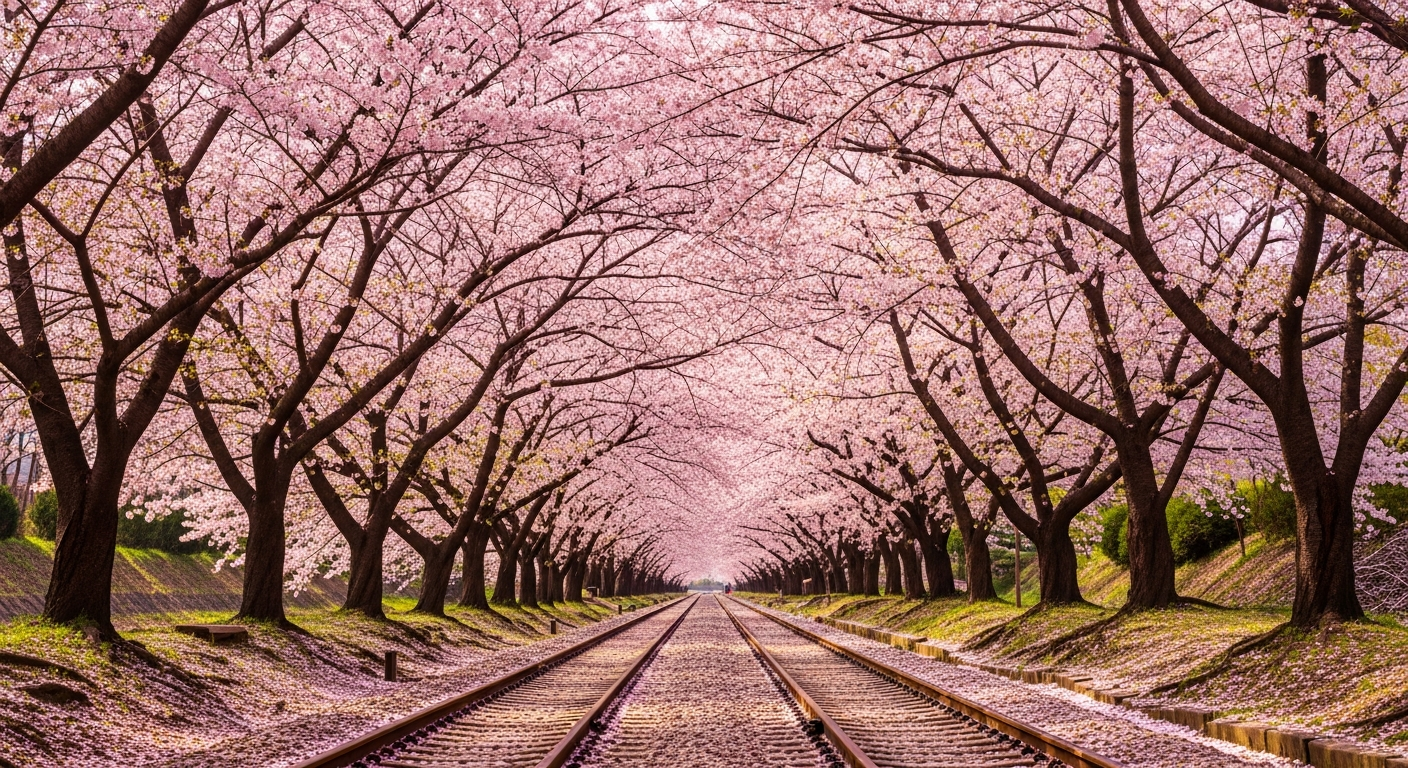
Gyeonghwa Station (경화역) is the image that stops people cold. A decommissioned rail line, cherry trees planted so close to the tracks that the branches meet overhead, forming a tunnel. Trains no longer run through it. The tunnel remains. It is not a reconstruction or a tourist installation — it simply survived, and the trees grew.
📍 Jinhae Gunhangje Festival (진해 군항제)
- Address: Jinhae-gu, Changwon City, South Gyeongsang Province (경상남도 창원시 진해구 일대)
- Hours: Festival typically runs late March to early April; open-air, no set closing time
- Admission: Free
- Getting there: From Busan Sasang Bus Terminal (사상버스터미널), approximately 50 minutes by bus to Jinhae. No direct KTX connection — ground transport only.
- Official site: https://www.gunhangje.com [현지 확인 필요]
Gyeongju (경주): Blossom Over a Thousand Years
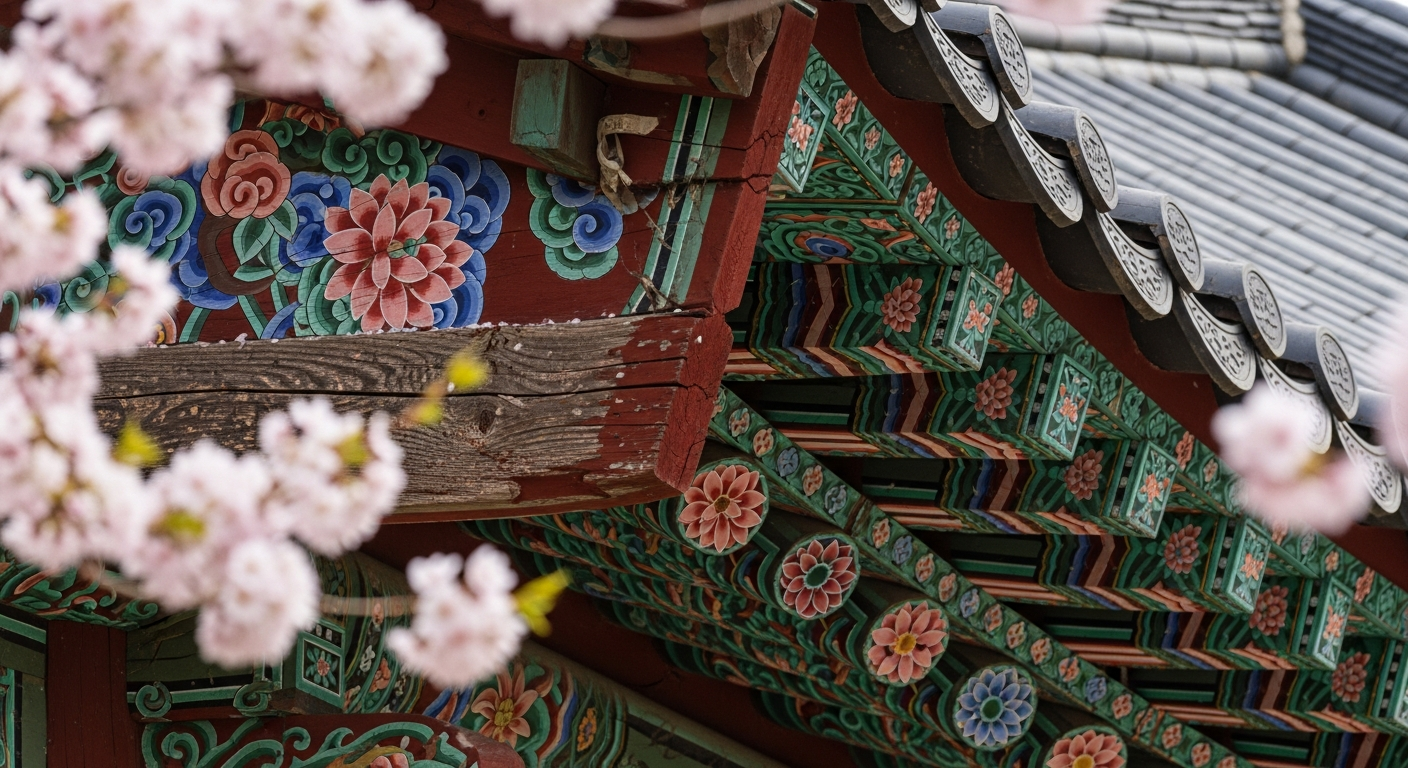
Gyeongju served as the capital of the Silla Kingdom for nearly a thousand years. The burial mounds — grass-covered tumuli the size of apartment buildings — sit in the middle of the city like green parentheses around modern life. In spring, cherry trees line Bomun Lake (보문호) and the roads approaching Bulguksa Temple (불국사). The blossoms here don’t compete with the architecture. They complete it. A UNESCO World Heritage Site framed by cherry trees is an entirely different category of experience from a city boulevard framed by the same.
Gyeongju doesn’t need the cherry blossoms to justify a visit. The cherry blossoms need Gyeongju to justify themselves.
📍 Bulguksa Temple (불국사)
- Address: 385 Bulguk-ro, Gyeongju, North Gyeongsang Province (경상북도 경주시 불국로 385)
- Hours: 07:00–18:00 (seasonal variation possible; 현지 확인 필요)
- Admission: Approximately KRW 6,000 for adults [현지 확인 필요]
- Getting there: From Gyeongju Station (경주역), Bus 10 or 11 to Bulguksa — approximately 40 minutes
- Official site: https://www.bulguksa.or.kr
📍 Bomun Lake Resort Area (보문관광단지)
- Address: Bomun-ro, Gyeongju, North Gyeongsang Province (경상북도 경주시 보문로 일대)
- Hours: Outdoor lake area accessible at all times
- Admission: Free (lake promenade)
- Getting there: From Gyeongju Station, Bus 10 or 150 to Bomun Tourist Complex
- Official site: https://www.gyeongju.go.kr [현지 확인 필요]
Jeju Island (제주도): First Bloom, Different Rules
Jeju blooms before the mainland. The island’s latitude and maritime climate push peak bloom to mid-to-late March — sometimes a full two weeks ahead of Seoul. But the cherry trees here are a different species: King Cherry (왕벚나무, Prunus × yedoensis var. nudiflora), believed by many botanists to be native to Jeju. The trees are larger. The flowers lean more pink than white. And the backdrop — volcanic rock, tangerine orchards, the silhouette of Hallasan (한라산) — is unlike anything on the peninsula.
Noksan Road (녹산로) in Seogwipo cuts through 10 kilometers of canola fields and cherry trees in simultane