
Seoul doesn’t slow down at midnight. It accelerates.
While most cities pull their shutters down by ten, Seoul’s street food culture shifts into a higher gear after dark — louder, greasier, more honest. The pojangmacha (포장마차) lanterns flicker on. The tteokbokki (떡볶이) pots begin their slow boil. And the city’s real appetite reveals itself.
This isn’t a tourist performance. It’s a survival ritual that has been running for decades, born from exhaustion, desperation, and the particular Korean genius for turning hardship into flavor.
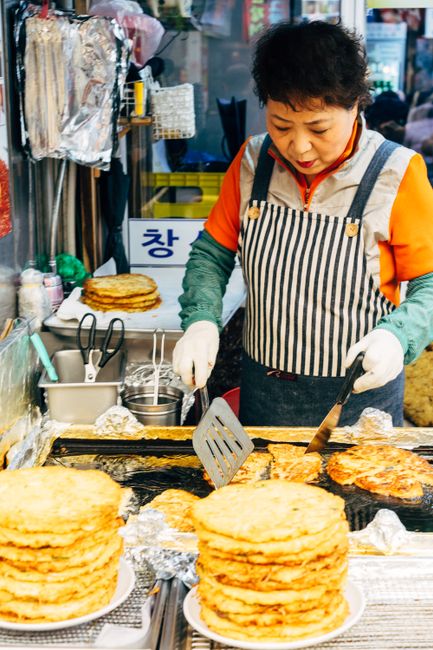
Why 10 PM Is Actually When Seoul Starts Eating
Korean office culture runs long. According to OECD data from 2023, South Korean workers averaged over 1,900 hours annually — among the highest in the developed world, roughly 200 hours more than the OECD average. Dinner at 7 PM is a fantasy for most Seoul workers. Dinner at 10 PM is just Tuesday.
That structural exhaustion built an entire culinary ecosystem. The pojangmacha, the 24-hour gimbap (김밥) joint, the fried chicken delivery window still blinking at 2 AM — none of this exists by accident. It exists because hunger doesn’t clock out.
Three words define late-night Seoul street food: desperation, trial, and — eventually — transcendence. The best dishes on these carts weren’t invented in restaurant kitchens. They were invented by vendors who had nothing left to lose, mixing whatever was available into something that had to sell by morning or not at all.
The finest street food in the world is always cooked by someone who couldn’t afford to fail.
The Literacy of the Street: Reading a Night Market Without Korean
Here’s the irony that hits every foreign visitor within the first twenty minutes: Seoul’s night markets are visually overwhelming but linguistically impenetrable. Korea’s literacy rate sits at approximately 97.9% (UNESCO, 2022) — one of the highest on earth. Almost everything is written down: menus, prices, vendor names, preparation methods. All in Hangul. All at speed.
For a non-Korean speaker, this creates a strange inversion. You’re surrounded by information you cannot access. The language that serves 52 million people fluently leaves you completely blind. You point. You guess. You eat something you can’t name and discover it’s the best thing you’ve had all year.
That gap — between what’s written and what’s understood — is actually where the most interesting food encounters happen. The vendor who speaks no English but holds up three fingers for 3,000 won. The ajumma (아줌마) who simply hands you a skewer and watches your face. The transaction that requires zero shared language and produces complete mutual satisfaction.
Carry Google Translate’s camera function. It won’t always be accurate, but it will be close enough to distinguish tteokbokki from sundae (순대) — and that distinction matters at 11 PM when you’re standing in front of a steaming cart with 500-won coins in your hand.
Five Night Markets That Operate After 10 PM — What’s Actually There
Gwangjang Market (광장시장) — The Oldest Hunger
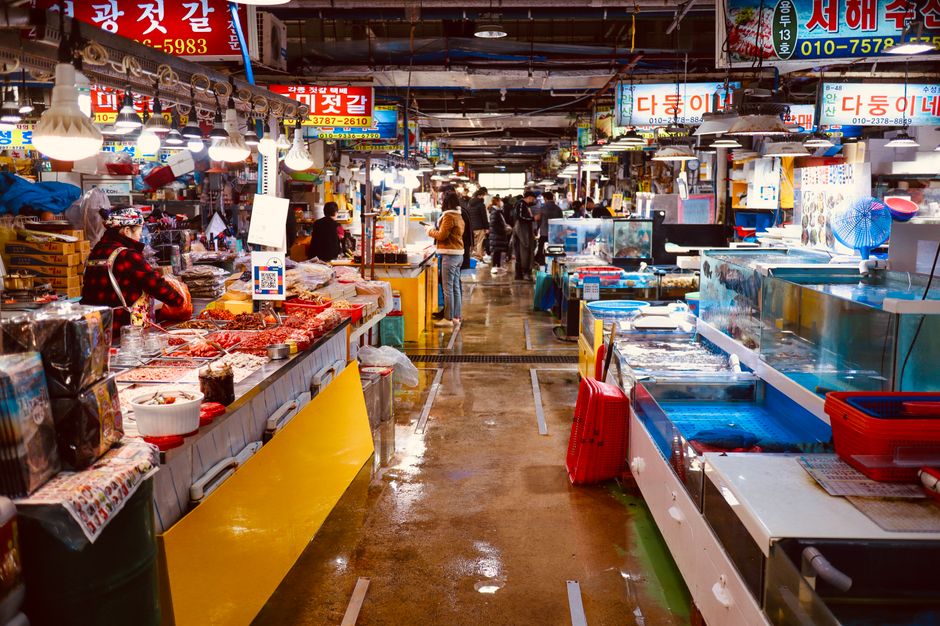
Gwangjang Market opened in 1905. It has fed Seoul through Japanese occupation, war, poverty, and economic miracle. The night vendors here are not performing authenticity — they are authenticity, in the most unsentimental sense.
After 10 PM, the silk and fabric stalls close. The food alley takes over completely. Bindaetteok (빈대떡) — mung bean pancakes fried in lard on flat iron griddles — are the anchor dish. One pancake runs approximately 4,000–5,000 KRW (roughly $3 USD as of 2024). The sound alone — that violent sizzle when the batter hits the pan — is worth the subway fare.
Mayak gimbap (마약김밥) is sold here too: thumbnail-sized rice rolls dipped in mustard and soy sauce. “Mayak” means narcotic. The name is not hyperbole.
📍 Gwangjang Market (광장시장)
- Address: 88 Changgyeonggung-ro, Jongno-gu, Seoul
- Hours: 9:00 AM – varies by vendor; food alley active until approximately 11:30 PM (some stalls close earlier)
- Admission: Free
- Getting there: Seoul Metro Line 1 or 5 — Jongno 5-ga Station, Exit 8
- Official site: http://www.kwangjangmarket.co.kr
Myeongdong (명동) Street — The Tourist Current That Hides Real Food
Most travel guides dismiss Myeongdong as a tourist trap. They’re not entirely wrong, but they’re missing the point. By 10 PM, when the cosmetics stores close and the tour groups thin out, the food stalls that remain are feeding locals heading home from Euljiro offices. That demographic shift changes everything on offer.
Look for the tornado potato (회오리감자) carts — a full spiral-cut potato on a skewer, fried to order and dusted with cheese powder or spicy seasoning. One skewer runs approximately 3,000–4,000 KRW. Also worth seeking out: grilled lobster tails, mozzarella-stuffed corn dogs, and hotteok (호떡) — brown sugar and cinnamon pancakes that burn your fingers and your mouth in equal measure.
The language barrier peaks here. Vendors have refined their systems of fingers, price boards, and pointing over years of international foot traffic. You will not starve. You might overpay by 500 won. Accept it.
📍 Myeongdong Street Food Zone
- Address: Myeongdong-gil, Jung-gu, Seoul (main pedestrian street)
- Hours: Street food vendors typically active from 11:00 AM – 11:00 PM; some run until midnight on weekends
- Admission: Free
- Getting there: Seoul Metro Line 4 — Myeongdong Station, Exit 6 or 8
- Official site: https://www.visitseoul.net
Dongdaemun (동대문) Design Plaza Area — Midnight Fuel for Shift Workers
Dongdaemun’s wholesale fashion district runs 24 hours. The buyers, cutters, and delivery workers who keep that system moving eat at 2 AM because that’s when their shift breaks. The food stalls around Dongdaemun History & Culture Park cater to exactly that reality.
Soondae (순대) — blood sausage stuffed with glass noodles and vegetables — is the signature dish here. It arrives on a styrofoam plate with liver, lung, and a pile of coarse salt. It looks confrontational. It tastes like something your body has been missing without knowing it. A full plate runs 5,000–7,000 KRW (approximately $3.70–$5.20 USD at 2024 rates).
This is where the real inspiration lives — not in polished food halls, but in the carts that have occupied the same spot for fifteen years, serving the same workers who have been buying from the same vendor since they were apprentices. That continuity is the flavor.
📍 Dongdaemun Night Food Stalls
- Address: Around Dongdaemun History & Culture Park, Euljiro 6-ga, Jung-gu, Seoul
- Hours: Many stalls operate from 10:00 PM – 5:00 AM
- Admission: Free
- Getting there: Seoul Metro Line 2, 4, or 5 — Dongdaemun History & Culture Park Station, Exit 1
- Official site: https://www.ddp.or.kr
The Practical Reality: What Can Go Wrong After 10 PM
Scenario: it’s 11:45 PM, you’ve eaten something from a cart in Dongdaemun that tasted extraordinary, and now your stomach is sending early distress signals. You don’t know the Korean word for pharmacy. You don’t know if the subway is still running. Your phone battery is at 9%.
This is not hypothetical. It’s the standard late-night situation for foreign visitors in Seoul — and it has a workable solution set.
First: Seoul Metro’s last trains run between approximately 11:30 PM and 1:00 AM depending on the line and day (confirm current schedules at www.seoulmetro.co.kr — schedules adjust seasonally). After that, taxis are abundant and relatively affordable; a cross-city ride rarely exceeds 15,000–20,000 KRW ($11–$15 USD). Use the KakaoTaxi app, which has an English interface and displays fixed-rate estimates before you book.
Second: 24-hour pharmacies (약국) are marked with a green cross. In Myeongdong and Hongdae, several operate past midnight. For stomach issues, ask for “소화제” — show the characters on your phone. Most pharmacists in tourist-heavy districts have basic English capability or will point you to the right shelf.
Third: if the situation escalates — food poisoning symptoms, allergic reaction — the nearest 24-hour emergency assistance is available through the Korea Health Hotline at 1339, which offers interpretation services in multiple languages around the clock. Save that number before you head out.
The city is not trying to hurt you. But it is not trying to protect you either. That’s the deal with any real city.
What the Night Market Actually Costs — And What It Reveals
A full late-night street food circuit — four or five items across two or three stalls — runs approximately 15,000–25,000 KRW per person ($11–$18 USD at 2024 exchange rates). That’s less than a single cocktail at most hotel bars in the same city. The price gap between Seoul’s formal dining scene and its street food culture is not gradual — it’s a cliff edge.
That gap is a statement. It says something about who the city was built to feed, and who it was built to impress. The night market feeds the workers. The restaurant feeds the performance. Both are real. Only one runs until 3 AM.
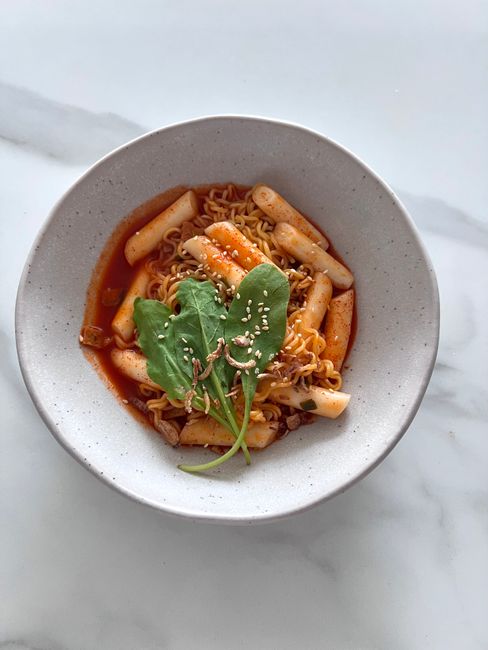
The tteokbokki that costs 3,500 KRW from a pojangmacha cart near Euljiro took decades of vendor iteration to become what it is — spicier, stickier, more aggressively seasoned than any restaurant version. That evolution happened in the dark, in the cold, under financial pressure, with no safety net. Desperation sharpened it. Trial refined it. The result is something that no amount of culinary school training has managed to replicate indoors. You can book tours in advance to explore these markets with local guides who understand the nuances, or stay connected with a local eSIM to navigate independently and discover hidden stalls.
The best food in Seoul was never invented. It was survived into existence.
Rover’s Take
Every city claims a night food culture. Seoul is one of the few that actually built its identity around one — not for romance, not for tourism, but because its people were too tired and too hungry to wait for morning.