
Seoul has four shopping districts. Every travel guide tells you the same thing. What they don’t tell you is that each one operates on a completely different logic — and walking into the wrong one with the wrong expectations will cost you time, money, and the specific thing you actually came to buy.
This is not a list. This is a field map.

Myeongdong (명동): The Trap That’s Worth Walking Into
Myeongdong is the most visited shopping street in South Korea. On peak weekends, foot traffic exceeds 100,000 people per day — a density comparable to Times Square compressed into a corridor roughly 400 meters long. Every major Korean cosmetics brand has a flagship here. So does every tourist trap.
The trick is knowing which is which.
The street-level vendors selling hotteok (호떡) and egg bread are not traps. They’re the reason to be here at 9 PM, when the subway exits disgorge crowds and the smell of brown sugar and cinnamon hits you before you even spot the stall. The trap is the cosmetics shop employee who stops you at the door, presses a sample into your hand, and has you standing at a checkout counter before you’ve said a word. It happens to nearly every first-time visitor. The products are real. The pressure is real too.
What most guides skip: the buildings behind the main street. The alleyways running parallel to Myeongdong-gil hold smaller boutiques, local snack vendors, and — critically — prices that drop 20 to 30 percent the moment you step off the main drag. The same sheet mask sold for ₩3,500 on the main strip appears for ₩2,200 two blocks east.
The real Myeongdong is not the street. It’s the grid behind it.
One practical scenario foreign visitors rarely anticipate: you’ve bought three bags of skincare products and your carry-on is now overweight. The Myeongdong Post Office, less than a five-minute walk from the main street, handles international parcel shipping. Staff speak basic English. Boxes are available at the counter. Shipping to the US or Europe typically runs 7 to 14 business days via K-Packet, with costs starting around ₩15,000 depending on weight. Not glamorous. Genuinely useful.
📍 Myeongdong Shopping Street (명동)
- Address: Myeongdong-gil, Jung-gu, Seoul
- Hours: Most shops open 10:00 AM – 10:00 PM daily; street vendors active until midnight on weekends
- Admission: Free
- Getting there: Seoul Metro Line 4, Myeongdong Station (명동역), Exit 6 or 8
- Official site: https://www.visitseoul.net
Gangnam (강남): Where the Price Tag Is the Product
Gangnam is not a shopping district. It is a statement. The area around Apgujeong Rodeo Street (압구정 로데오거리) and Cheongdam-dong (청담동) hosts the highest concentration of luxury brand flagships in Seoul — Chanel, Dior, Bottega Veneta, and a roster of Korean designer labels that charge Parisian prices without apology.
The average retail spend per visitor in Gangnam’s luxury corridor is estimated to be among the highest in Asia, rivaling comparable streets in Tokyo’s Ginza and Hong Kong’s Canton Road. What separates Gangnam is the presence of Korean luxury labels — brands like Tchai Kim and Wooyoungmi — operating flagship stores here that simply don’t exist at the same scale anywhere else in the world.
For visitors who aren’t buying luxury goods, Gangnam still delivers. COEX Mall (코엑스몰), one of the largest underground shopping malls in Asia at roughly 86,000 square meters of retail space, sits directly beneath Bongeunsa Temple (\ubd09\uc740\uc0ac). The juxtaposition is not accidental. It is Seoul in a single image: a 1,200-year-old Buddhist temple above a basement packed with fast fashion, electronics, and a Starfield Library that has become one of the most photographed interiors in the country.
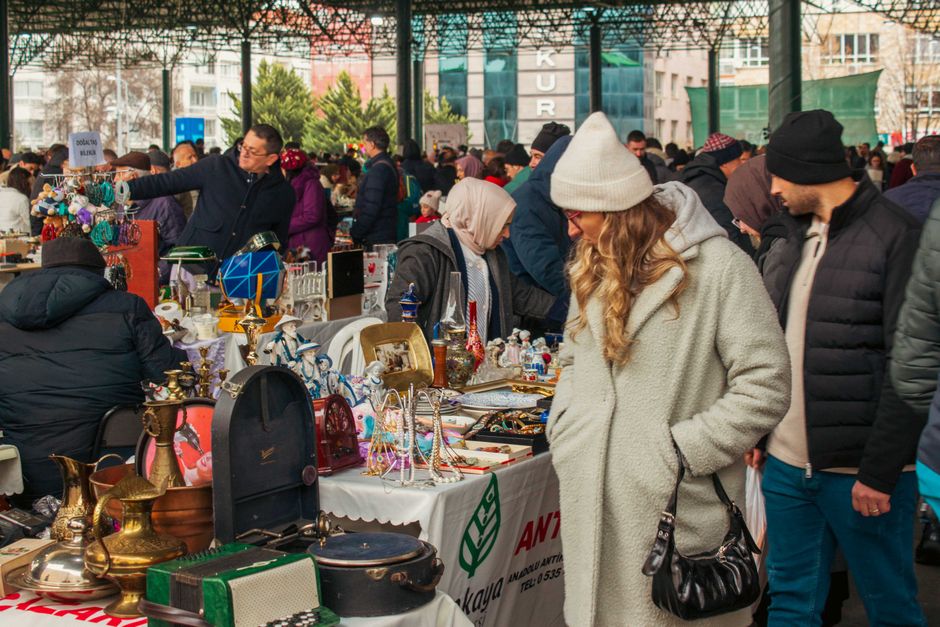
Garosu-gil (가로수길), the tree-lined street connecting Sinsa Station to the quieter Sero-su-gil (세로수길), operates at a different register entirely. Independent concept stores, Korean ceramics boutiques, and small-batch clothing labels occupy storefronts that would cost twice as much in Myeongdong. The prices aren’t cheap. The curation is exceptional.
📍 COEX Mall (코엑스몰)
- Address: 513 Yeongdong-daero, Gangnam-gu, Seoul
- Hours: 10:00 AM – 10:00 PM daily
- Admission: Free
- Getting there: Seoul Metro Line 2 or Bundang Line, Samseong Station (삼성역), Exit 5 or 6
- Official site: https://www.coexmall.com
📍 Garosu-gil (가로수길)
- Address: Garosu-gil, Sinsa-dong, Gangnam-gu, Seoul
- Hours: Varies by shop; most active noon – 9:00 PM
- Admission: Free
- Getting there: Seoul Metro Line 3, Sinsa Station (신사역), Exit 8
- Official site: https://www.visitseoul.net
Dongdaemun (동대문): The Market That Never Sleeps, Literally
Dongdaemun Design Plaza (동대문 디자인 플라자) opens at midnight. Not as a gimmick. As a function. The wholesale fabric and fashion market surrounding it runs on a nocturnal schedule built around the needs of manufacturers, designers, and bulk buyers who need to source materials before the rest of the city wakes up. By 2 AM on a Thursday, the floors of Dongdaemun Market (동대문시장) are moving faster than most retail streets manage at noon.
The district spans roughly 20 shopping buildings within a one-kilometer radius. The retail malls — Doota Mall (두타몰), Lotte Fitin (롯데 피트인), Migliore (밀리오레) — operate on standard hours and cater to individual shoppers. The wholesale buildings, including Pyeonghwa Clothing Market (평화시장) and Gwanghee-dong’s fabric floors, are where the real architecture of Korean fashion begins. Minimum purchase quantities apply in most wholesale sections. A single bolt of fabric can cost less than ₩10,000 per meter when you buy five or more.
For the solo traveler, the retail floors of Doota Mall offer something rare in Seoul: late-night shopping until 4 AM on weekends. If your flight lands at Incheon at 11 PM and you’ve cleared customs by 1 AM, Dongdaemun is the one district in the city that will still be fully operational when you arrive. That is not a metaphor. That is a schedule.
Seoul’s fashion industry doesn’t start on a runway. It starts at 2 AM in a building you’ve never heard of.
📍 Doota Mall (두타몰)
- Address: 275 Jangchungdan-ro, Jung-gu, Seoul
- Hours: 10:30 AM – 5:00 AM (Friday and Saturday); 10:30 AM – 4:00 AM (Sunday – Thursday)
- Admission: Free
- Getting there: Seoul Metro Line 1 or 4, Dongdaemun Station (동대문역), Exit 8
- Official site: https://www.doota-mall.com
📍 Dongdaemun Design Plaza (동대문 디자인 플라자)
- Address: 281 Eulji-ro, Jung-gu, Seoul
- Hours: 10:00 AM – 9:00 PM (exhibition halls vary)
- Admission: Varies by exhibition; outdoor plaza is free
- Getting there: Seoul Metro Line 2 or 4 or 5, Dongdaemun History & Culture Park Station (\ub3d9\ub300\ubb38\uc5ed\uc0ac\ubb38\ud654\uacf5\uc6d0\uc5ed), Exit 1
- Official site: https://www.ddp.or.kr
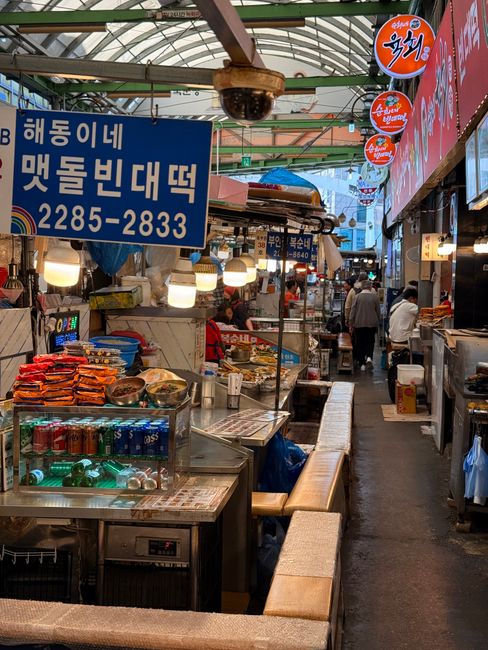
Hongdae (홍대): The District That Keeps Reinventing Its Own Edges
Hongdae is named after Hongik University (홍익대학교). The university’s fine arts program seeded a neighborhood culture of independent design, street performance, and anti-commercial retail that — ironically — became so commercially successful it is now studied as a case in urban gentrification. The original indie boutiques that defined the district in the early 2000s have largely migrated to the surrounding sub-neighborhoods of Yeonnam-dong (연남동) and Mangwon-dong (망원동), pushed out by the same foot traffic they helped create.
What remains in the core Hongdae area is still worth the trip, but you have to know what you’re looking for. The Saturday Flea Market (홍대 프리마켓), running on weekends from spring through autumn in the park near Exit 9, is one of the few places in Seoul where you can buy directly from the person who made the object in your hand. Handmade jewelry, illustrated prints, ceramic cups, hand-bound notebooks — none of it mass-produced, all of it priced between ₩5,000 and ₩50,000.
The vintage clothing scene in Hongdae is the densest in Seoul. Stores like KOMMA (코마) and the cluster of secondhand shops along the streets near Sang-su Station (상수역) carry Korean and Japanese vintage at prices that undercut comparable shops in Tokyo by 30 to 50 percent, according to frequent cross-market buyers active in both cities. The selection changes weekly. There is no algorithm for this. You show up or you miss it.
Yeonnam-dong, a ten-minute walk from Hongdae’s main strip, has emerged as the district’s most interesting current chapter. The former railroad tracks running through the neighborhood were converted into Gyeongui Line Forest Park (경의선 숲길) — a linear green corridor lined with independent cafés, small galleries, and concept stores that feel nothing like the tourist-facing Hongdae most visitors see. On a weekday afternoon, stay connected with a Korean eSIM so you can wander these quieter streets at your own pace — this is the closest Seoul gets to unhurried.
📍 Hongdae Free Market (홍대 프리마켓)
- Address: Hongik Park, Wausan-ro, Mapo-gu, Seoul
- Hours: Saturdays