
Six hundred years ago, a dynasty drew a line in the dirt and said: here. This is where power lives now. That line became a wall. That wall became a palace. That palace became five — and Seoul was born around them.
Most visitors spend three hours at Gyeongbokgung (경복궁), take a photo in rented hanbok, and call it done. That’s not wrong. It’s just incomplete. The palaces of Seoul are not a single story. They are three entirely different arguments about what a kingdom should look like — built by the same dynasty, in the same city, across five centuries of war, exile, and resurrection.
This is the argument worth having.

Gyeongbokgung: The Palace That Refused to Stay Dead
Gyeongbokgung (경복궁) was burned. Twice. The first time, in 1592, Japanese forces torched it during the Imjin War. It sat in ruins for 273 years — not a ruin anyone cleaned up or memorialized, just a field where a palace used to be. Then in 1867, the regent Heungseon Daewongun rebuilt it from scratch, forcing the cost onto a population already exhausted by famine and foreign pressure. Thirty years later, Japanese agents assassinated Queen Myeongseong inside its walls. The Japanese colonial government then demolished roughly 90% of the palace’s buildings to construct their own Government-General building directly in front of the throne hall — a calculated act of architectural erasure.
That colonial building stood until 1995, when the South Korean government demolished it. The palace has been under restoration ever since. As of 2024, approximately 40% of the original structures have been rebuilt. The work continues.
What you walk through today is simultaneously a ruin, a reconstruction, and a statement of intent. Geunjeongjeon (근정전), the throne hall, sits at the end of a 200-meter stone-paved axis that forces you to slow down. The scale is deliberate — the Joseon (조선) dynasty wanted its subjects to feel small. It worked then. It still works now.
The throne hall doesn’t ask for your reverence. It simply takes it.
The National Folk Museum of Korea sits within the palace grounds — a practical bonus that most visitors skip. Don’t. It provides the human-scale context that the grand architecture intentionally withholds.
📍 Gyeongbokgung Palace
- Address: 161 Sajik-ro, Jongno-gu, Seoul
- Hours: 9:00 AM – 6:00 PM (March–October); 9:00 AM – 5:00 PM (November–February); closed Tuesdays
- Admission: Adults ₩3,000; free for visitors wearing hanbok
- Getting there: Gyeongbokgung Station (경복궁역), Line 3, Exit 5
- Official site: https://www.royalpalace.go.kr
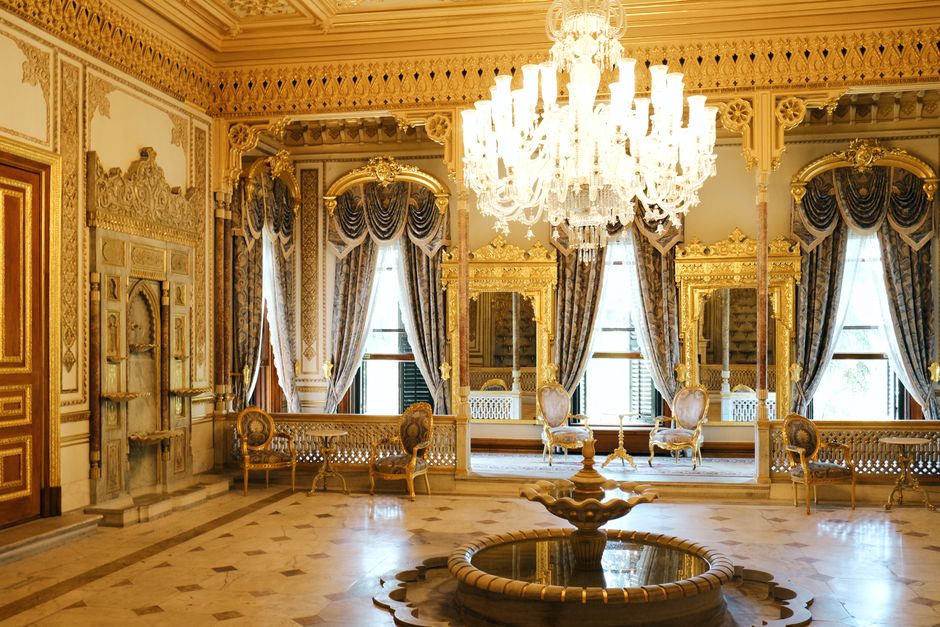
Changdeokgung: The Palace That Hid on Purpose
If Gyeongbokgung is a declaration, Changdeokgung (창덕궁) is a conversation — one between architecture and landscape that took 600 years to develop and still isn’t finished.
Built in 1405 as a secondary palace, Changdeokgung became the primary royal residence for most of the Joseon dynasty’s later centuries, precisely because it felt less exposed than Gyeongbokgung. The kings who lived here were not retreating from power. They were choosing a different relationship with it — one that permitted gardens instead of parade grounds, irregular rooflines instead of rigid symmetry.
UNESCO designated Changdeokgung a World Heritage Site in 1997, citing its “outstanding example of Far Eastern palace architecture and garden design.” The citation is accurate but bloodless. What it means in practice: the Huwon (후원), the Secret Garden at the palace’s rear, covers 78 acres and contains over 300 species of trees, some more than 300 years old. The garden was designed not to impress visitors — there were no visitors — but to give kings a place to think without the machinery of court pressing in from every side.
Access to the Huwon requires a separate guided tour, with tickets selling out days in advance during spring (late March to early May) and autumn (mid-October to mid-November). The cherry blossoms inside the garden walls arrive approximately one week later than those in the rest of the city, sheltered by the surrounding forest. That delay is not incidental. The garden was designed to hold time differently.
📍 Changdeokgung Palace
- Address: 99 Yulgok-ro, Jongno-gu, Seoul
- Hours: 9:00 AM – 6:00 PM (February–May, September–October); 9:00 AM – 6:30 PM (June–August); 9:00 AM – 5:30 PM (November–January); closed Mondays
- Admission: Palace ₩3,000; Huwon guided tour ₩8,000 (advance booking required)
- Getting there: Anguk Station (안국역), Line 3, Exit 3
- Official site: https://www.cdg.go.kr
Jongmyo: The Place That Isn’t for the Living
Jongmyo (종묘) is the most important site on this list. It is also the least visited. That ratio is not a coincidence — it is a symptom of how tourism flattens meaning.
Built in 1395, Jongmyo is a Confucian royal shrine where the spirit tablets of Joseon’s kings and queens are enshrined. It is not decorative. It is not a backdrop. The main hall, Jeongjeon (정전), stretches 109 meters — one of the longest wooden structures in Asia — and houses 49 spirit tablets across 19 chambers. The building was extended repeatedly as more monarchs died and needed to be accommodated. The architecture grew from obligation, not ambition. That distinction is visible in every line of the structure.
UNESCO inscribed Jongmyo as a World Heritage Site in 1995. The Jongmyo Jerye (종묘제례), the royal ancestral rite performed here, along with its accompanying music, was designated a UNESCO Intangible Cultural Heritage in 2001. The rite is performed once a year, on the first Sunday of May, and is open to the public. It draws roughly 100,000 visitors annually — a fraction of the crowds that queue for Gyeongbokgung on any given weekend.
The silence inside Jongmyo is not peaceful. It is deliberate. The Joseon architects understood something that modern memorial designers often forget: spaces built for the dead should feel different from spaces built for the living. They do.
You are not a tourist here. You are a trespasser who has been graciously permitted to observe.
📍 Jongmyo Shrine
- Address: 157 Jongno, Jongno-gu, Seoul
- Hours: 9:00 AM – 6:00 PM (March–May, September–October); 9:00 AM – 6:30 PM (June–August); 9:00 AM – 5:30 PM (November–February); closed Tuesdays
- Admission: Adults ₩1,000
- Getting there: Jongno 3-ga Station (종로3가역), Lines 1/3/5, Exit 11
- Official site: https://jm.cha.go.kr
The Practical Reality: What Nobody Tells You Before You Go
Here is a scenario that happens more often than the tourism boards acknowledge. A visitor arrives at Gyeongbokgung at 10:00 AM on a Saturday in October — peak foliage season — and finds a queue stretching 200 meters from the main gate. The wait is 40 minutes. Inside, the throne hall plaza is so dense with visitors that the intended experience of scale and solemnity is entirely lost. The visitor spends two hours, sees the highlights, and leaves feeling vaguely cheated without knowing why.
The fix is straightforward: arrive at 9:00 AM on a weekday, or visit Jongmyo first — it opens at the same time, with a fraction of the crowd — then walk the 10 minutes to Changdeokgung before the tour groups arrive. The three sites form a geographic triangle in Jongno-gu (종로구) that can be covered on foot in a single day without rushing, roughly 4 kilometers of walking in total.
Language is a minor obstacle, not a wall. Gyeongbokgung offers free guided tours in English at 11:00 AM and 1:30 PM daily. Jongmyo’s English-language guided tours run on a fixed schedule; check the official site before visiting, as times shift seasonally. Changdeokgung’s Huwon tour is guided and available in English, but requires advance online booking — the English-language booking interface occasionally lags behind the Korean version in displaying available slots. If slots appear unavailable, try the Korean-language page with a browser translation tool.
One practical note for worst-case scenarios: if you lose your ticket or your phone dies at the entrance, staff at all three sites speak enough English to resolve basic issues. The Cultural Heritage Administration of Korea operates a tourist helpline at 1330, available 24 hours in English, Japanese, and Chinese. Stay connected with a local eSIM to keep that number within reach.
The Combined Route: Three Palaces, One Argument
The Joseon dynasty lasted 518 years — longer than the Ottoman Empire, longer than the British Empire at its height. It endured through a combination of geographic isolation, bureaucratic sophistication, and a Confucian social architecture so precisely engineered that it could absorb foreign invasion, internal rebellion, and dynastic near-collapse without fully breaking.
These three sites encode that argument in stone and timber. Gyeongbokgung is the dynasty’s self-image — formal, frontal, designed to project authority across an open courtyard. Changdeokgung is its interior life — the place where the same kings who performed power in the throne hall went to read, garden, and be human. Jongmyo is its theory of time — the insistence that the dead remain present, that legitimacy is inherited rather than invented, that a dynasty is not merely a government but a continuous family obligation.
Visit all three in sequence and the argument becomes legible. Visit only one and you have a photograph.
- Recommended day route (weekday): Jongmyo 9:00 AM → Changdeokgung 11:00 AM → Gyeongbokgung 2:00 PM
- Best months: April (cherry blossoms), May (Jongmyo Jerye ceremony), October–November (autumn foliage)
- Worst months: July–August (heat index regularly exceeds 35°C; outdoor stone surfaces become genuinely punishing in direct sun)
- Combined admission: All three sites total ₩7,000 — less than a single museum ticket in most European capitals
Rover’s Take
Seoul spent a century having its history systematically demolished, then spent the next century rebuilding it — and the result is a city where the most honest thing about its palaces is not their grandeur but their damage. Visitors who see only the grandeur are, without knowing it, finishing the work the colonizers started.