
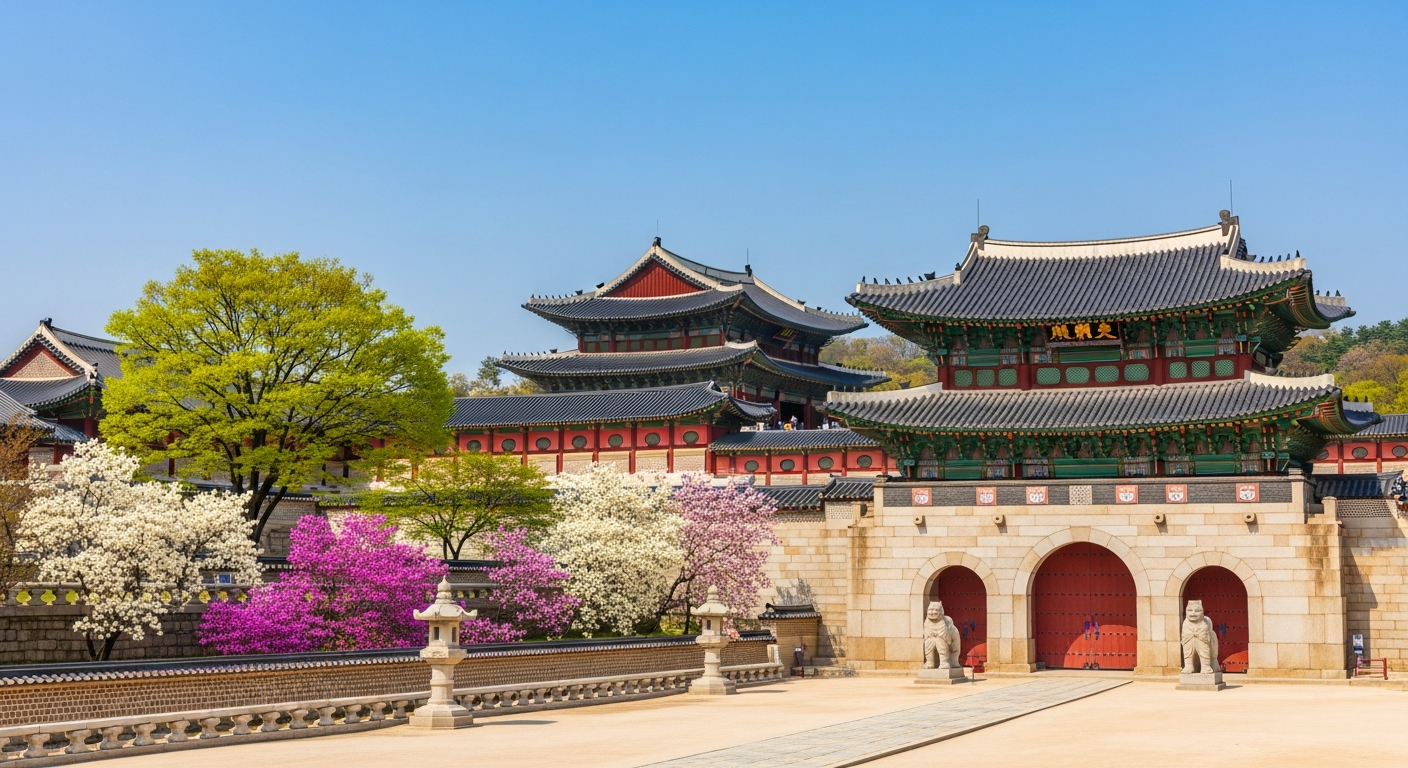
As spring gently transitions into the vibrant early summer, typically around Korea’s bustling May Golden Holiday, the country awakens with an unparalleled charm, inviting travelers to discover its rich tapestry of history, culture, and breathtaking natural beauty. This period offers ideal weather for exploration, from ancient palaces nestled within bustling metropolises to serene island retreats and volcanic wonders. For international visitors planning a memorable journey, we’ve curated a list of four quintessential destinations that perfectly encapsulate the essence of Korea during this splendid season.
1. Gyeongbokgung Palace
Gyeongbokgung Palace, the grandest of the Five Grand Palaces built during the Joseon Dynasty, stands as a majestic testament to Korea’s imperial past. Located in the heart of Seoul, its sprawling grounds, intricate architecture, and serene courtyards offer a profound journey back in time. For those visiting during spring and early summer, the palace grounds are particularly picturesque, with blooming flora adding a splash of color to the historic scenery.
A highlight for any visitor is the spectacular Royal Guard Changing Ceremony, a vibrant reenactment that brings history to life with its elaborate traditional costumes and solemn routines. This captivating display provides a glimpse into the regal ceremonies of a bygone era. Furthermore, don’t miss the unique opportunity to don a traditional Korean Hanbok. Wearing Hanbok not only enhances the immersive experience as you stroll through the palace but also grants you free admission, allowing for truly unforgettable photo opportunities against the stunning backdrop of the ancient palace.
Quick Information
📍 Address: 161 Sajik-ro, Jongno-gu, Seoul, Republic of Korea
⏰ Operating Hours: 09:00 – 18:00 (March-May, September-October), 09:00 – 18:30 (June-August). Last admission is one hour before closing. Closed every Tuesday.
💰 Admission Fee: Adults (ages 19-64): ₩3,000. Free for Hanbok wearers, visitors under 18 or over 65, and on the last Wednesday of each month. An Integrated Pass (covering 5 Palaces & Jongmyo Shrine) is available for ₩10,000.
2. Nami Island (Naminara Republic)
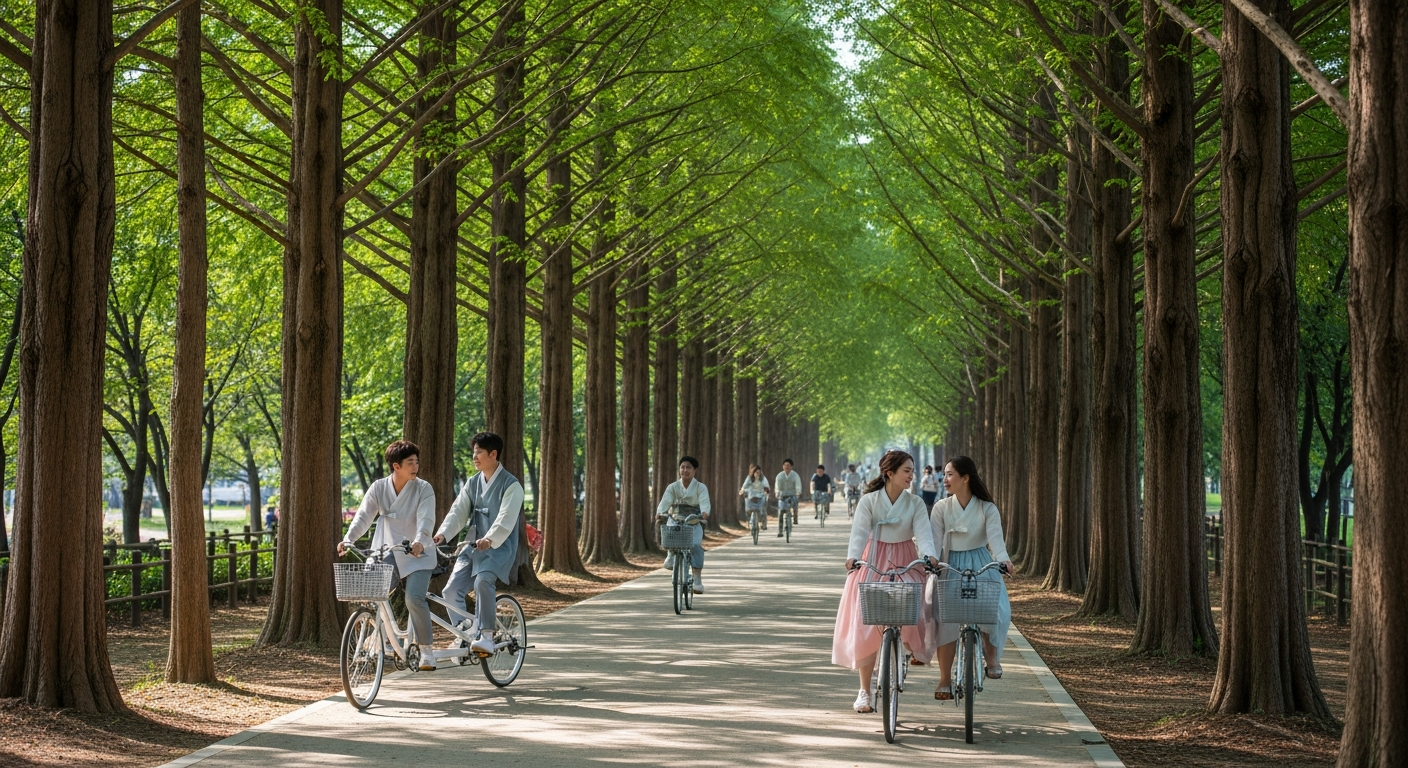
Just a short escape from Seoul, Nami Island, also known as the “Naminara Republic,” offers a tranquil and enchanting natural haven. This half-moon shaped island is celebrated for its breathtaking natural landscapes that transform beautifully with each season. During spring and early summer, the island bursts with verdant foliage, particularly along its iconic Metasequoia and Ginkgo tree lanes, complemented by a myriad of blooming flowers.
Nami Island gained international fame as a primary filming location for the beloved Korean drama ‘Winter Sonata,’ drawing Hallyu fans from around the globe who seek to relive its romantic scenes amidst the picturesque scenery. Beyond its natural beauty, the island is a vibrant cultural hub, dotted with unique art installations, cultural centers, charming restaurants, and cozy cafes. Visitors can also engage in diverse activities such as cycling or taking a story tour bus, making for a truly engaging experience.
Quick Information
📍 Address: 1 Namisum-gil, Namsan-myeon, Chuncheon-si, Gangwon-do 24464, South Korea
⏰ Operating Hours: 08:00 – 21:00 (Year-round). Ferry services from Gapyeong Wharf to Nami Island run from 08:00-09:00 (every 30 mins), 09:00-18:00 (every 10-20 mins), and 18:00-21:00 (every 30 mins).
💰 Admission Fee: General: ₩19,000 (includes round-trip ferry). Discounted (middle/high school students, 70+): ₩16,000. Special Discount (36 months-elementary school): ₩13,000. Zipline option (includes admission & return ferry): ₩55,000.
3. Bukchon Hanok Village
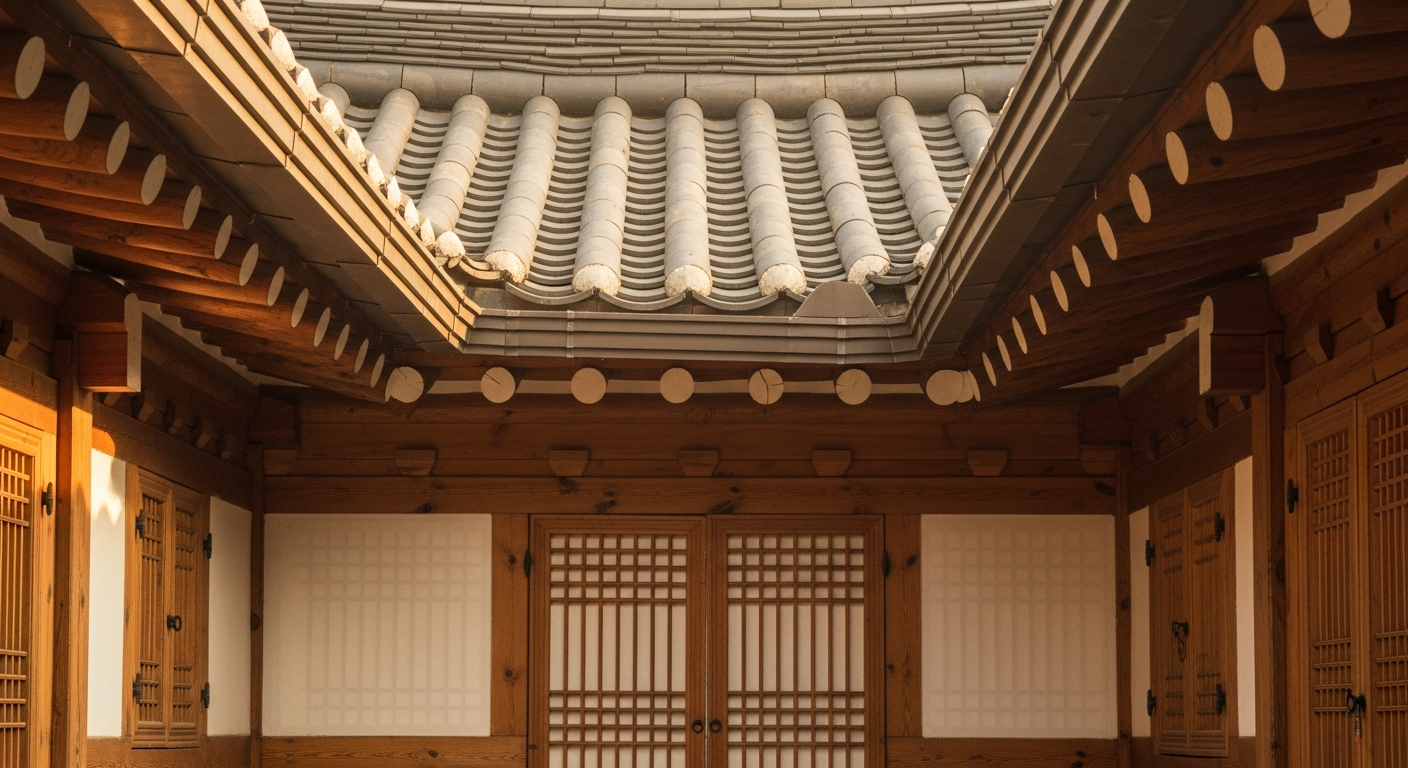
Nestled between the grand palaces of Gyeongbokgung and Changdeokgung, Bukchon Hanok Village offers a rare glimpse into 600 years of Seoul’s history. This charming traditional Korean village is a beautifully preserved residential area featuring hundreds of traditional hanok houses, many of which still function as homes today. Walking through its narrow, winding alleys feels like stepping back in time, providing a serene escape from the modern city.
The village presents a unique juxtaposition of ancient architecture against the backdrop of Seoul’s contemporary skyline, making for incredibly distinctive photographic opportunities. Beyond its aesthetic appeal, Bukchon is a living museum where visitors can immerse themselves in traditional Korean culture. Many hanoks have been converted into artisan workshops, guesthouses, restaurants, and tea houses, offering hands-on experiences and a deeper understanding of Korea’s heritage.
Quick Information
📍 Address: 37 Gyedong-gil, Jongno-gu, Seoul, Republic of Korea
⏰ Operating Hours: 10:00 – 17:00 (Visitors are requested to maintain quiet etiquette as it is a residential area). Closed Sundays (may vary for specific areas/activities).
💰 Admission Fee: Free.
4. Seongsan Ilchulbong Peak (Sunrise Peak)
Journey to Jeju Island, a UNESCO World Heritage site, to witness the breathtaking beauty of Seongsan Ilchulbong Peak, famously known as “Sunrise Peak.” This spectacular tuff cone, formed approximately 5,000 years ago by a hydrovolcanic eruption, boasts a unique and awe-inspiring natural landscape that has earned global recognition. Its distinctive crater rim and dramatic coastal cliffs are a geological marvel.
The most iconic experience here is watching the sunrise from the peak’s summit, a truly magnificent spectacle that draws countless visitors who ascend the pathways in the early hours of the morning. The panoramic