
May in Korea doesn’t ease you in. It hits you with warmth, crowds, and a sky that flips between brilliant blue and hazy yellow — sometimes within the same afternoon. The temperature swings between 15°C (59°F) in the early morning and 27°C (80°F) by midday. That’s a 12-degree gap before noon. Pack wrong, and you’ll spend half your trip sweating through a jacket you can’t take off because your bag is already full.
This is early summer in Korea. Not spring. Not summer. The awkward, beautiful, punishing in-between — and it demands a specific kind of preparation.
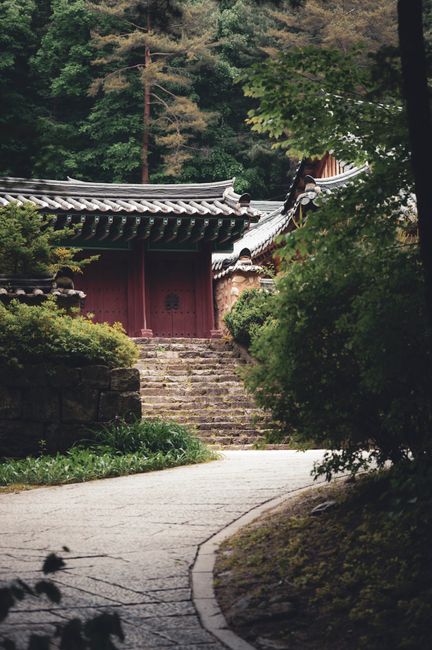
The Temperature Trap: Why “Mild Spring” Is a Lie Tourists Tell Themselves
Seoul (서울) in early May 2026 is forecast to follow the same pattern it has held for the past decade: cool mornings, warm afternoons, and unpredictable rain. According to Korea Meteorological Administration data from 2024, the average daily temperature range in Seoul during May spans roughly 13°C — wider than Tokyo or Bangkok in the same month. That gap is the enemy of the underprepared traveler.
The trap is this: tourists arrive having read “mild spring weather” in a travel blog written in February. They pack light sweaters and linen. By May 10th, they’re standing in Insadong (인사동) at 2 PM, 26°C, humidity already climbing past 60%, wearing a wool blend that was perfectly reasonable at 7 AM. There’s no elegant solution once you’re already there. The solution is in the suitcase before you leave home.
Early May in Korea is not a season. It’s a negotiation between winter’s last grip and summer’s first demand.
The other variable: yellow dust. Known locally as hwangsa (황사), this fine particulate matter blows in from the Mongolian and Chinese deserts between March and May. On high-concentration days — which occurred an average of 7–10 times per May in Seoul between 2020 and 2024 (Korea Environment Corporation) — outdoor visibility drops, throats tighten, and eyes burn. A basic surgical mask won’t cut it. You need a KF94 (the Korean equivalent of an N95), and you need it before you land, because airport convenience stores sell out fast on bad days.
What to Actually Pack: The Non-Negotiable List
Forget the packing cubes for a moment. Think in scenarios.
Scenario 1: You Wake Up at 6 AM for Bukhansan
Bukhansan National Park (북한산국립공원) sees its heaviest foreign visitor traffic in May. Trail temperature at dawn: 12–14°C. Trail temperature at the summit by 10 AM: 20–22°C. You’ll start cold and finish sweating. A thin moisture-wicking base layer under a zip-up windbreaker is the answer — not a hoodie, not a down vest. The windbreaker compresses into a fist-sized ball. The hoodie does not.
📍 Bukhansan National Park (북한산국립공원)
- Address: 262 Bogungmun-ro, Dobong-gu, Seoul (도봉구 보국문로 262)
- Hours: Open year-round; trail access from sunrise to sunset
- Admission: Free
- Getting there: Subway Line 3 to Gupabal Station (구파발역), then bus 704
- Official site: https://bukhan.knps.or.kr
Scenario 2: A Dust Alert Hits While You’re at Gyeongbokgung
You’re mid-tour at Gyeongbokgung Palace (경복궁) when your phone buzzes with an air quality alert — “Very Unhealthy.” This happens. It happened on six separate days in May 2023 alone (AirKorea data). You have two options: you packed a KF94 mask, or you didn’t. If you didn’t, you’re either buying a questionable one from a street vendor at a markup or breathing particulate matter for the next four hours.
Pack at least four KF94 masks. They’re flat, virtually weightless, and the difference between a good day and a scratchy throat that derails your next 48 hours.
📍 Gyeongbokgung Palace (경복궁)
- Address: 161 Sajik-ro, Jongno-gu, Seoul
- Hours: 9:00 AM – 6:00 PM (closed Tuesdays)
- Admission: ₩3,000 (adults); free with hanbok rental
- Getting there: Subway Line 3, Gyeongbokgung Station (경복궁역), Exit 5
- Official site: https://www.royalpalace.go.kr

Clothing Architecture: How to Dress for a 12-Hour Day That Changes Three Times
The word “layers” gets thrown around until it means nothing. Here’s what it actually looks like for a full day in Seoul in early May:
- 6–9 AM (15°C): Moisture-wicking long-sleeve base layer plus a lightweight windbreaker. No cotton. Cotton holds sweat and stays cold.
- 10 AM–3 PM (24–27°C): Windbreaker tied around the waist or compressed in a daypack. Short-sleeve or breathable long-sleeve only. UV-protective fabric if you’re in direct sun — Seoul’s May UV index regularly hits 7–8 (WHO scale: “High”).
- 4–7 PM (cooling to 18°C): Windbreaker back on. If you’re near the Han River (한강) or any elevated area, factor in an additional 2 degrees of wind chill.
- After 8 PM (15°C and dropping): A light mid-layer — merino wool or a thin fleece — becomes necessary if you’re sitting outside at pojangmacha (포장마차) stalls or rooftop bars.
Footwear is where most foreign visitors miscalculate. Seoul’s streets are not flat. Myeongdong (명동), Hongdae (홍대), Bukchon Hanok Village (북촌한옥마을) — all involve sustained uphill walking on stone, tile, or uneven pavement. A stylish sneaker with zero arch support becomes a medical problem by day three. Cushioned walking shoes with grip. That’s the answer, and it’s not glamorous.
The Rain Question Nobody Prepares For
May is technically pre-monsoon in Korea. But “pre-monsoon” doesn’t mean dry. Seoul receives an average of 85–100mm of rainfall in May (Korea Meteorological Administration, 2019–2024 average) — comparable to London’s wettest months. The rain arrives fast, often without warning, and the ubiquitous Korean convenience stores (CU, GS25, 7-Eleven) sell cheap umbrellas at every corner for around ₩5,000–₩8,000. But a travel-size compact umbrella in your daypack saves you the scramble. It weighs 200 grams. There is no argument against it.
The Pharmacy Scenario: What Happens When Your Body Fails You
Here’s the scenario nobody puts in a packing guide but that happens constantly: it’s Day 4, you’ve walked 20,000 steps daily, the dust has been bad, and you wake up with a sore throat, swollen sinuses, and eyes that feel like sandpaper. You need a pharmacy.
Korean pharmacies (약국, yakguk) are everywhere — there’s one within 200 meters of virtually every subway exit in Seoul. They are staffed by licensed pharmacists who can advise and dispense without a prescription for most common ailments. The barrier is language. Most pharmacists in tourist-heavy areas speak basic English, but not all. The practical move: before you leave home, write down your symptoms in Korean using Google Translate, screenshot it, and save it to your phone’s camera roll. “I have a sore throat and a runny nose” becomes a solvable problem in 90 seconds instead of a 20-minute pantomime.
Over-the-counter antihistamines, decongestants, and throat lozenges are widely available. Prices are low — a three-day supply of antihistamines typically runs ₩3,000–₩6,000. The system works. You just need to find the door with the green cross.

Five Items That Don’t Make Lists But Should
- Portable battery pack (10,000 mAh minimum): Navigation, translation apps, air quality monitoring, and Naver Maps running simultaneously will drain a standard smartphone in under five hours. Seoul’s subway has charging stations, but you won’t always be on the subway.
- KF94 masks (4–6 units): Already mentioned. Still worth repeating.
- Travel-size sunscreen SPF 50+: Korea’s May sun is not gentle. A UV index of 7–8 means visible skin damage in under 30 minutes of unprotected exposure. Korean sunscreen brands (Anessa, ISDIN, Biore) are widely available at convenience stores and pharmacies — but buying in advance avoids the first-day scramble.
- A physical transportation card (T-money): Kakao Pay and Apple Pay work at many transit points, but T-money cards — available at airport convenience stores for ₩2,500 — work everywhere, including rural buses outside Seoul. Digital fails. Physical doesn’t.
- A small crossbody bag with a zipper closure: Myeongdong and Hongdae on weekends are dense. Not dangerous by global standards, but dense enough that an open tote becomes a liability. Zipper closure, worn in front. Simple.
The Currency and Cash Reality in 2026
Korea has accelerated toward cashless infrastructure faster than almost any other country — but “almost” is doing a lot of work in that sentence. Street food vendors at Gwangjang Market (광장시장), small temple entrance fees, and rural convenience stores still operate on cash. Withdrawing Korean won (KRW) from ATMs at GS25 or 7-Eleven convenience stores using a foreign Visa or Mastercard works reliably. Fees vary by home bank, but ATM exchange rates are consistently closer to the interbank rate than airport exchange counters. Carry ₩50,000–₩100,000 in cash at all times; the rest can go on card. Before you arrive, consider purchasing a local eSIM to stay connected throughout your trip without worrying about roaming charges.
📍 Gwangjang Market (광장시장)
- Address: 88 Changgyeonggung-ro, Jongno-gu, Seoul
- Hours: 9:00 AM – 11:00 PM (most vendors); some stalls open earlier
- Admission: Free
- Getting there: Subway Line 1 or 2, Jongno 5-ga Station (종로5가역), Exit 8
- Official site: https://www.gwangjangmarket.co.kr
Rover’s Take
Korea in early May is one of the most rewarding travel windows on the calendar — and it will punish anyone who treats preparation as optional.